
TL;DR:
- A job search pipeline is a stage-based tracking system that organizes opportunities from discovery to offer. It helps manage multiple leads, maintains momentum, and improves success rates, especially in IT and cybersecurity roles. Building and maintaining a disciplined pipeline makes job searches more efficient and boosts confidence.
A job search pipeline is a stage-based tracking system that organizes every active opportunity from first discovery through final offer, giving you a clear view of where each application stands at any moment. The industry term for this approach is a "job search execution system," and it applies directly to IT and cybersecurity roles where hiring cycles are long, technical screens are multiple, and competition is high. The average professional job search takes 3 to 6 months. Without a pipeline, that timeline becomes a fog of forgotten follow-ups and missed opportunities. With one, it becomes a managed workflow you control.
What is a job search pipeline and why does it matter?
A job search pipeline is a structured framework that tracks each opportunity through defined stages, from initial role discovery to a closed outcome. The term borrows directly from sales pipeline methodology, where deals move through stages until they convert or drop. For IT and cybersecurity job seekers, the same logic applies: you are managing multiple leads simultaneously, each at a different point in the hiring process.
The core benefit is legibility. A standardized pipeline reduces cognitive load by making your next action obvious at every stage. Instead of asking "what should I do today," you check your pipeline and act on what each stage requires. That clarity also reduces anxiety, which is a real factor in searches that stretch across months.
Without a pipeline, most job seekers default to reactive behavior. They apply in bursts, forget to follow up, and lose track of which version of their resume went where. A pipeline converts that reactive pattern into a proactive one. You stop chasing and start managing.
What are the essential stages of a job search pipeline for IT and cybersecurity roles?
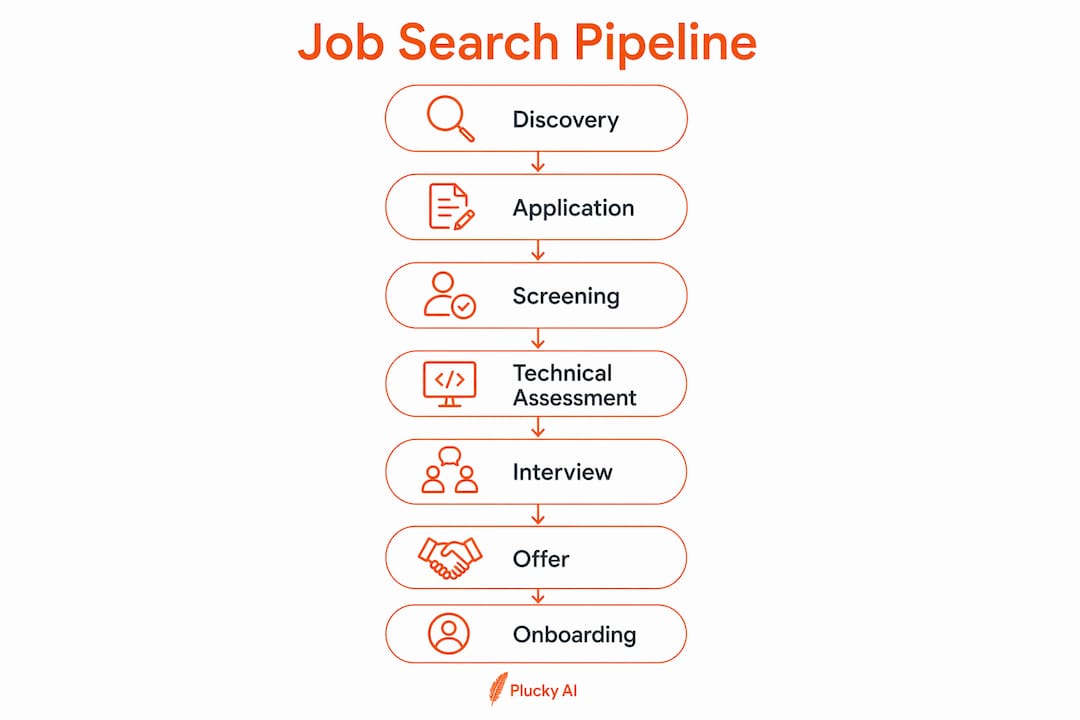
A well-built pipeline uses six core stages. Each stage has a clear entry trigger and a defined next action.
- Discovery: You have identified a target company or role but have not yet applied. Activities here include researching the company, identifying the hiring manager, and tailoring your resume. The six-part job search execution system places Direction and Proof work at this stage, before any application goes out.
- Applied: Your application is submitted. The clock starts. You note the date and set a follow-up reminder.
- Screening: A recruiter or HR contact has reached out for an initial call. This stage confirms the role is real and the company is actively hiring.
- Interviewing: You are in active technical or behavioral interview rounds. This stage often has multiple sub-steps in IT and cybersecurity, including coding assessments, architecture reviews, and security scenario questions.
- Offer: A verbal or written offer is on the table. Negotiation happens here.
- Closed: The opportunity is resolved, either accepted, declined, or withdrawn. Closed leads still carry value because you can track what you learned from each one.
A stalled application shows up as a lead that has not moved stages in more than 10 days without a scheduled next step. That is your signal to follow up or pivot. Recognizing stalls early keeps your pipeline honest and prevents false confidence from inactive leads sitting in the "Applied" column.
How to build and maintain an effective job search pipeline workflow
Building a pipeline starts with choosing a tracking method and committing to it. Your options range from a simple spreadsheet to a dedicated job search CRM. A spreadsheet works for early-stage searches. A job search CRM becomes necessary when you are managing more than 10 active leads with multiple contacts per company.

The recommended pipeline size for an active search is 15 to 20 active leads distributed across stages. That number is not arbitrary. Maintaining 15 to 20 active leads creates enough volume to absorb rejections without losing momentum, while staying small enough to manage each lead with real attention. Spreading those leads across Discovery, Applied, and Interviewing stages means you always have new leads entering while others advance.
Follow this sequence to build your pipeline from scratch:
- Define your target list. Identify 30 to 40 companies in your IT or cybersecurity niche. Focus on companies, not just job postings. Focusing on companies accesses the hidden job market, where roles are filled before they are ever posted publicly.
- Set up your tracking system. Create columns for Company, Role, Stage, Date Applied, Contact Name, Follow-Up Date, and Notes. Keep it simple enough that you will actually update it daily.
- Populate the Discovery stage first. Add all target companies before applying to any of them. This forces you to research before you apply, which improves application quality.
- Schedule weekly pipeline reviews. Every Monday, check each lead's stage and set the week's follow-up actions. This 20-minute habit prevents stagnation.
- Set time-bound follow-ups. Follow up after 7 to 10 days in any waiting stage. If there is no response after a second follow-up, move the lead to Closed and redirect that energy.
Pro Tip: Color-code your pipeline stages. Green for active movement, yellow for waiting, red for stalled. A visual scan at the start of each week tells you immediately where your energy needs to go.
Tracking job search metrics like application-to-screen rate and screen-to-interview rate tells you which stage is underperforming. That data turns your pipeline from a tracking tool into a feedback system.
What strategies improve the success rate within a job search pipeline?
The single biggest lever in any pipeline is referrals. Referrals convert to offers at four times the rate of cold applications from job boards. That ratio means one warm introduction is worth four cold applications in terms of expected outcomes. Every IT and cybersecurity job seeker should treat networking as a pipeline activity, not a separate task.
These strategies move leads through your pipeline faster:
- Prioritize targeted applications over volume. Ten tailored applications consistently outperform fifty generic ones. Tailoring means matching your resume's proof points to the specific role's requirements, not just swapping job titles.
- Research companies to access unadvertised roles. Connecting with hiring managers at target companies before a role is posted puts you in the pipeline before competition begins.
- Track what you learn from each closed lead. Tracking learning and improvements identifies where your pipeline loses traction. If you consistently stall at the technical screen stage, that is a skill gap signal, not a luck problem.
- Avoid common pipeline mistakes. Applying to roles you are underqualified for, sending identical resumes to every company, and failing to follow up are the three most common errors. Each one is a pipeline leak.
"Experienced job seekers use their pipeline to create pressure during final stages by signaling that multiple leads are advanced simultaneously. That signal shifts negotiation leverage in your favor." Source
This tactic works because hiring managers respond to scarcity. When you communicate that you are in final rounds elsewhere, the timeline for your current offer compresses. Your pipeline gives you the data to make that signal credible.
How to customize your pipeline for IT and cybersecurity job seekers
IT and cybersecurity searches have specific realities that generic pipeline advice does not address. Technical roles often have four to six interview rounds. Security clearance checks add weeks to timelines. Niche certifications like CISSP, CEH, or CompTIA Security+ change which roles you qualify for and which companies target you.
Your pipeline stages should reflect those realities. Add a "Technical Assessment" sub-stage between Screening and Interviewing. Add a "Clearance Check" stage for federal or defense roles. The more your pipeline mirrors the actual hiring process in your niche, the more accurate your forecasting becomes.
| Pipeline element | Generic approach | IT and cybersecurity approach |
|---|---|---|
| Interview stages | One or two rounds | Three to six rounds including technical screens |
| Follow-up timing | Standard 7 days | 7 to 10 days, adjusted for clearance delays |
| Application focus | Job boards only | Company-first, with direct hiring manager outreach |
| Resume tailoring | One version | Role-specific versions with technical proof points |
| Tracking tool | Basic spreadsheet | CRM or AI-powered platform for volume management |
If you are conducting a stealth job search while employed, your pipeline also needs a confidentiality layer. Mark which contacts know you are searching and which do not. Keep your LinkedIn activity settings adjusted to avoid alerting your current employer.
Pro Tip: Use your pipeline's Interviewing stage notes to prep for each round. Log every question you were asked and your answer quality rating. That log becomes your interview improvement system over time.
AI-powered tools change the speed at which you can build and manage a pipeline. Using AI tools for job search in IT compresses the Discovery stage significantly by surfacing relevant roles and hiring manager contacts faster than manual research allows.
Key takeaways
A job search pipeline is the most effective system for IT and cybersecurity professionals to manage multiple opportunities, maintain momentum, and convert leads into offers.
| Point | Details |
|---|---|
| Pipeline definition | A stage-based tracking system that moves opportunities from Discovery through Closed. |
| Recommended pipeline size | Maintain 15 to 20 active leads across stages to absorb rejections without losing momentum. |
| Follow-up discipline | Act on waiting-stage leads after 7 to 10 days to prevent stagnation and keep leads moving. |
| Referrals over cold apps | Referrals convert to offers at four times the rate of cold applications from job boards. |
| IT-specific customization | Add technical assessment and clearance check stages to reflect actual cybersecurity hiring cycles. |
Why pipeline thinking changed how I approach tech job searches
The biggest shift I have seen in IT job seekers who adopt pipeline thinking is not efficiency. It is confidence. When you can see that you have three leads in the Interviewing stage and five more in Applied, you stop negotiating from desperation. You negotiate from a position of real options.
Most job seekers treat the search as a single-threaded process: apply, wait, hear back, repeat. That model puts all your emotional weight on one outcome at a time. A pipeline forces parallel processing. You are always moving something forward, even when one lead goes quiet.
The discipline required is not complicated. It is a 20-minute weekly review and a commitment to follow up on schedule. What makes it hard is the discomfort of logging rejections and stalled leads honestly. But that honesty is exactly what makes the system work. A long-game job search strategy in IT requires you to treat each closed lead as data, not defeat.
My advice: start with a simple spreadsheet, not a complex tool. Get the habit right first. Once you are managing 15 or more active leads, upgrade to a CRM or AI-powered platform. The tool matters less than the discipline of using it consistently.
— Diego
How Pluckjobs supports your IT job search pipeline
Building a pipeline manually works, but it slows you down at the stages that matter most: finding the right roles and reaching the right people.
Pluckjobs combines Apollo contact intelligence with SerpAPI-powered role discovery to surface precision job matches and hiring manager outreach data for IT and cybersecurity professionals. Instead of spending hours in the Discovery stage, you get targeted leads with direct contact information already attached. Tailored resumes are generated within the same platform. The result is a pipeline that starts fuller and moves faster. Start building your pipeline with Pluckjobs and replace cold applying with direct, informed outreach from day one.
FAQ
What is a job search pipeline in simple terms?
A job search pipeline is a tracking system that organizes your active job opportunities by stage, from first contact through final offer. It shows you exactly where each application stands and what action to take next.
How many active leads should be in a job search pipeline?
A healthy pipeline maintains 15 to 20 active leads distributed across stages. That volume keeps momentum steady even when individual leads stall or close without an offer.
How is a job search pipeline different from a job application list?
A job application list records where you applied. A pipeline tracks the stage, next action, and follow-up date for each lead, turning a static record into a live workflow.
How do I prevent my job search pipeline from stalling?
Set a follow-up reminder for every lead in a waiting stage and act on it after 7 to 10 days. If two follow-ups produce no response, close the lead and redirect that energy to active prospects.
Does a job search pipeline work for cybersecurity roles specifically?
Yes, and it works better when you add cybersecurity-specific stages like technical assessments and clearance checks. A standard IT job application workflow maps directly onto pipeline stages and reflects the multi-round hiring process common in security roles.