
Conducting a job search while employed in IT is a strategic process of managing visibility, timing, and digital footprint to protect your current position while advancing your career. 47% of US workers plan to job hunt in 2026, yet only 25% are actively searching at any given time. That gap exists because most professionals search quietly, on their own terms, without tipping off their employer. The advantage is real: employed candidates command higher salary offers, control the timeline, and never negotiate from desperation. This guide gives IT professionals the exact playbook to do it right.
How to job search while employed in IT without getting caught
85% of professionals exploring new roles are currently employed, which means confidential job searching is standard practice, not an exception. The risk is not in searching. The risk is in leaving a visible trail.
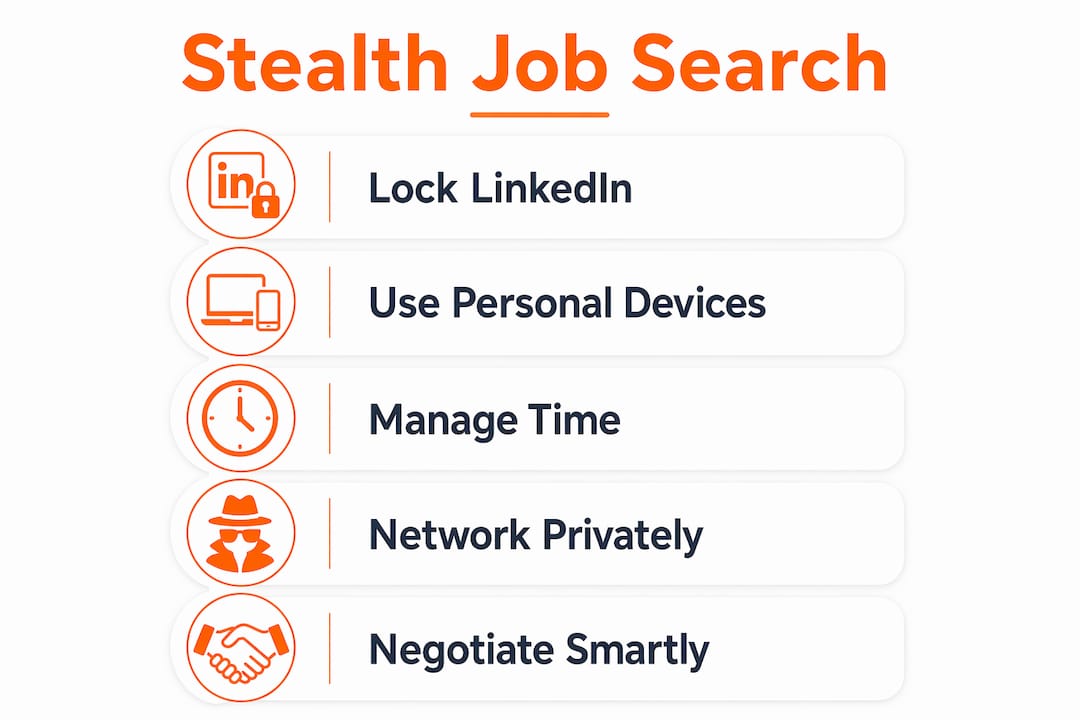
Lock down your LinkedIn profile first
LinkedIn is the first place your manager or HR team will notice changes. The public "Open to Work" green banner is the most common mistake IT professionals make. Switch to LinkedIn's Recruiters Only mode instead. This setting signals availability to external recruiters while hiding it from anyone at your current company. It is not foolproof on its own, so pair it with a keyword-optimized profile and direct recruiter outreach to maximize reach without exposure.

Avoid making large, sudden profile changes. Updating your headline, adding five new skills, and requesting ten endorsements in a single week creates an obvious activity spike. The most effective confidential search maintains a "boring" digital footprint where changes are gradual and unremarkable.
Use personal devices and dedicated contact information
Every job search communication belongs on personal infrastructure, not work systems. This means:
- Use a personal laptop or phone for all applications, recruiter calls, and job board activity
- Create a dedicated Gmail or Outlook address used exclusively for job search correspondence
- Never access job boards, LinkedIn recruiter messages, or application portals from a work device or work network
- Set up a Google Voice number if you prefer not to share your personal cell with recruiters early in the process
A dedicated search email and personal phone keeps all communications confidential and completely off work systems. This single step eliminates the most common source of accidental exposure.
Pro Tip: If your company uses monitoring software on work devices, assume everything on those machines is visible. Treat your work laptop as a public terminal and conduct zero job search activity on it.
When uploading your resume to job boards like Indeed or Dice, check whether the platform allows you to block specific companies from viewing your profile. Many do. Use that feature to prevent your current employer's recruiters from seeing your active status.
What does time management for a job search actually look like?
Mid-career IT professionals have roughly 7 hours per week available for job searching outside of work obligations. That number sounds tight because it is. Spending those hours randomly produces poor results. Batching tasks by type and scheduling them at predictable off-hours times is the structure that makes the difference.
Here is a practical weekly framework:
- Monday and Wednesday mornings (30 minutes each): Review new job postings on LinkedIn, Dice, or Levels.fyi. Flag roles that match your target criteria. Do not apply yet.
- Tuesday and Thursday lunch breaks: Send targeted outreach messages to hiring managers or recruiters at flagged companies. Keep messages under 100 words and specific to the role.
- Weekend mornings (60 to 90 minutes): Update your resume for specific roles, complete applications, and follow up on outstanding recruiter conversations.
- Evening blocks (as needed): Take phone screens and first-round video interviews. Most recruiters will accommodate 6:00 PM or later calls when you explain you are currently employed.
- PTO days (strategic use only): Reserve paid time off for final-round interviews and onsite visits only.
That last point deserves its own explanation. The "3-hour vacation rule" is a widely used tactic among employed job seekers: take a half-day or full day of PTO only when you reach the final stage of an interview process. Using PTO for every phone screen burns through your leave balance and creates a pattern your manager will notice.
Routine, patterned absences like repeated Friday afternoon "dentist appointments" trigger suspicion faster than almost anything else. Vary the timing, vary the reason, and keep the frequency low by reserving in-person or video panel interviews for roles where you are genuinely close to an offer.
Pro Tip: Use AI-powered job matching tools to automate the discovery and filtering phase. Platforms like Pluckjobs surface relevant IT and cybersecurity roles and provide hiring manager contact data, so you spend your 7 weekly hours on high-value tasks instead of manual searching.
How should you network and interview while still employed?
Networking while employed carries a specific psychological advantage: you are not asking for a job. You are gathering market intelligence. Reframing networking as intelligence gathering reduces anxiety and produces better conversations because you approach them from a position of curiosity rather than urgency. IT professionals who use this framing consistently report higher-quality connections and more genuine referrals.
Practical networking tactics for employed IT professionals include:
- Attend one industry event or virtual meetup per month, positioned as professional development, not job hunting
- Reconnect with former colleagues on LinkedIn with a message focused on their recent work, not your availability
- Engage in GitHub discussions, Stack Overflow answers, or cybersecurity forums to build visibility without signaling a job search
- Ask recruiters who reach out for a "market conversation" rather than an interview. This keeps the door open without committing to a formal process
For interviews, the logistics matter as much as the preparation. Schedule video interviews from a private location, never from a shared office or home background that reveals your current employer's branding. Dress professionally for video calls even when the interview is remote. Interviewers notice when a candidate looks like they stepped away from their desk mid-shift.
Communicate your confidentiality needs clearly and early. Tell every recruiter in the first conversation: "I am currently employed and conducting a confidential search. Please do not contact my current employer." Most recruiters respect this without question.
References should come from former managers or external contacts, not your current team. Asking a current colleague to serve as a reference is one of the fastest ways to expose a search before you are ready. Build your reference list from past roles, clients, or professional contacts who can speak to your technical skills without creating risk at your current job.
Pro Tip: When a recruiter asks for references early in the process, it is acceptable to say "I will provide references when we reach the offer stage." This is standard practice and signals professionalism, not evasiveness.
How does being employed give you negotiation leverage?
Employed candidates receive higher salary offers and hold more negotiating power than candidates who are unemployed. The reason is structural: you can walk away. A hiring manager knows you are not desperate, which changes the entire dynamic of the offer conversation.
Use that leverage deliberately by following this sequence:
- Never disclose your current salary first. In most US states, employers cannot legally require this information. Respond with your target range instead.
- Let the offer come to you in writing before negotiating. Verbal offers are not commitments. Wait for the written offer, then respond with a counter.
- Negotiate the full package, not just base salary. Remote work flexibility, signing bonuses, equity, and PTO are all negotiable for IT roles, especially at the senior level.
- Do not resign until you have a signed offer letter. A verbal "we want to hire you" is not an offer. Resignation before a signed letter is one of the most common and costly mistakes in an employed job search.
"The moment you resign without a signed offer, you lose all leverage. You are no longer an employed candidate. You are an unemployed one."
When you do resign, keep it professional and brief. Give the standard two weeks notice, prepare a transition document, and avoid sharing details about your new role or compensation. Counteroffers from your current employer are tempting but statistically unreliable. Disciplined structure and patience through the full process, including the resignation phase, produce better long-term outcomes than reactive decisions made under pressure.
Key takeaways
A discreet IT job search while employed succeeds when you control your digital footprint, protect your time, and negotiate from a position of strength.
| Point | Details |
|---|---|
| Lock down LinkedIn first | Switch to Recruiters Only mode and avoid sudden profile activity spikes that signal a search. |
| Use personal devices exclusively | All job search activity belongs on personal phones, laptops, and email accounts, never work systems. |
| Batch tasks in 7 weekly hours | Structure search tasks by type across mornings, lunch breaks, and weekends to stay efficient. |
| Save PTO for final rounds | Apply the 3-hour vacation rule: use paid time off only for final-round or onsite interviews. |
| Negotiate from employment | Never resign before a signed offer letter. Employed status produces higher offers and better terms. |
What I have learned from searching while still on the clock
The hardest part of a confidential IT job search is not the logistics. It is the mental load of performing well at your current job while quietly building toward something else. I have seen IT professionals burn out not from overwork but from the sustained cognitive split of being fully present in two professional realities at once.
The professionals who handle it best treat the search like a second project with its own scope, timeline, and deliverables. They do not let it bleed into work hours, and they do not let work anxiety bleed into their search. The separation is deliberate and maintained.
One thing I would tell anyone starting this process: your current role is not a cage. It is your strongest asset. The fact that you are employed, delivering results, and still in demand is exactly what makes you attractive to the next employer. Lean into that. Do not apologize for it in interviews. The employed candidate who is selective about their next move is far more compelling than the candidate who needs a job.
Patience is the skill most people underestimate here. Job searching while employed requires disciplined structure, and the timeline is almost always longer than you expect. That is fine. You have income, stability, and leverage. Use all three.
— Diego
Find your next IT role without the exposure risk
Pluckjobs is built specifically for IT and cybersecurity professionals who are searching while employed. The platform combines Apollo contact intelligence with SerpAPI-powered role discovery to surface precision job matches and deliver direct hiring manager outreach data. You get tailored resume outputs and targeted role discovery in one place, without cold applying to black-hole job boards. Every feature is designed for professionals who need efficiency and discretion in equal measure. If your discreet job search needs a smarter engine behind it, Pluckjobs is the tool built for exactly that situation.
FAQ
How do I job search while employed without my boss finding out?
Use LinkedIn's Recruiters Only mode, conduct all search activity on personal devices, and avoid sudden profile changes. A gradual, low-activity digital footprint is the most effective way to stay invisible to your current employer.
Is it ethical to job search while still employed?
Job searching while employed is standard professional practice. 85% of professionals exploring new roles are currently employed, and no ethical obligation requires you to disclose a search until you have accepted an offer and are ready to resign.
How much time per week does a job search realistically take?
Mid-career professionals average 7 hours per week for job search activities. Batching tasks by type across mornings, lunch breaks, and weekends makes that time productive without affecting work performance.
When should I tell my current employer I am leaving?
Tell your current employer only after you have a signed offer letter in hand. Resigning before a written offer removes your negotiation leverage and employment status simultaneously.
Should I accept a counteroffer from my current employer?
Counteroffers address compensation but rarely fix the underlying reasons you started searching. Most professionals who accept counteroffers resume their search within 12 months. Evaluate the full picture before accepting.