
What is a personal career board?
A personal career board is a curated group of trusted advisors who collectively guide your professional growth through diverse expertise and honest perspective. Unlike a single mentor relationship, this structure draws on multiple distinct archetypes to give you balanced input across every dimension of your career.
The concept was first popularized by business strategist Jim Collins, who framed it as a way to reduce uncertainty in high-stakes decisions by surrounding yourself with people who challenge your thinking rather than simply validate it.
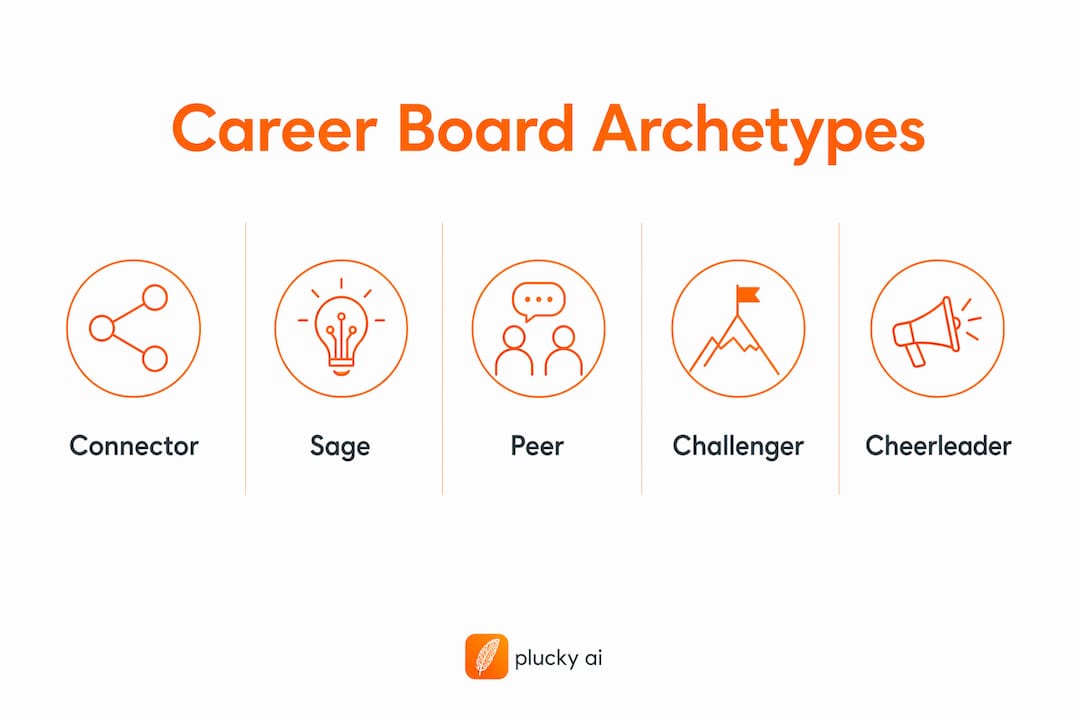
The five core archetypes are:
- Connector: Opens doors to networks and opportunities you cannot reach alone
- Sage: Brings deep experience and hard-won wisdom from years in the field
- Peer: Shares your current career stage and offers grounded, relatable perspective
- Challenger: Pushes back on your plans and guards against blind spots
- Cheerleader: Provides encouragement and keeps your confidence steady during difficult transitions
This is not an informal advisory network. A personal career board is intentional, structured, and built around your specific goals.
Table of Contents
- The five archetypes and what each one actually does for you
- Why IT and cybersecurity professionals need this more than most
- How to build your board and when to start
- Common misconceptions about personal career boards
- What this looks like in practice for IT and cybersecurity careers
- Which tools help you manage and engage your board?
- How do you know if your board is actually working?
- Key Takeaways
- FAQ
The five archetypes and what each one actually does for you
1. Connector

The Connector's value is access. In IT and cybersecurity, where many senior roles are filled through referrals before they're ever posted, a well-connected advisor can surface opportunities that AI-powered role discovery tools alone won't catch. Think a former CISO who now sits on multiple security startup boards.
2. Sage
A Sage has navigated the career transitions you're approaching. For a mid-level security engineer eyeing a director role, a Sage who has already made that jump can compress years of trial-and-error into a single conversation.
3. Peer
Peers offer something Sages cannot: real-time relevance. A fellow cloud architect facing the same certification decisions or compensation negotiations gives you a calibration point that senior advisors often lack.
4. Challenger
Including a Challenger who intentionally disagrees with your plans guards against blind spots. IT professionals frequently surround themselves only with supportive peers, which creates an echo chamber precisely when honest critique matters most.
5. Cheerleader
Cybersecurity careers involve high-pressure decisions, public failures, and long stretches of invisible work. A Cheerleader who genuinely believes in your trajectory keeps you moving when external validation is scarce.
Pro Tip: Don't recruit all five archetypes from the same company or specialty. A board that skews too heavily toward, say, red-team security professionals will miss the business, leadership, and cross-industry perspectives that shape real career advancement.
Why IT and cybersecurity professionals need this more than most
The cybersecurity field changes faster than almost any other technical discipline. Roles that didn't exist five years ago, like cloud security architect or AI red-teamer, are now among the most sought-after positions in the market. That pace creates a specific problem: the advice you got two years ago may already be outdated.
Jim Collins notes that a personal board reduces uncertainty in high-stakes decisions by providing guidance beyond corporate metrics. For a security professional deciding whether to pursue a CISSP, move into management, or pivot to a vendor role, that kind of holistic input is genuinely hard to find elsewhere.
There's also the isolation factor. Senior technical roles in IT and cybersecurity are often siloed. You may be the only person in your organization with your specific expertise, which makes internal guidance limited and peer comparison nearly impossible. A career development board directly solves that.
Pro Tip: Pair your board's strategic guidance with AI-powered job matching to act on their advice faster. When a Connector mentions a company worth targeting, use a tool like Pluckjobs to identify the hiring manager and get a tailored outreach in place the same day.
How to build your board and when to start
Start earlier than you think you should. Early-career professionals, even just two years into their careers, benefit from a board that includes peers and connectors. Waiting until you're in crisis or already at a senior level means you've missed years of compounding guidance.
A practical build process:
- Define your goals first. Identify where you want to be in three to five years, then map which archetypes you're missing in your current network.
- Prioritize diversity of industry and background. Include at least one advisor from outside pure IT or cybersecurity. A business leader or startup founder will surface assumptions you didn't know you were making.
- Start with warm relationships. Former managers, conference contacts, and respected peers are easier first asks than cold outreach to industry figures.
- Keep the board small. Managing more than five active members can become a time burden. Successful boards run on low-touch engagement: brief periodic updates rather than formal recurring meetings.
- Let membership evolve. As your career stage shifts, so should your board. There's no formal termination required; relationships can simply become less active as new ones take priority.
Pro Tip: Keep a searchable record of advice from each board member. When you're facing a major career decision, reviewing past guidance helps you make more informed choices rather than relying on memory or instinct alone.
Common misconceptions about personal career boards
The biggest myth is that a personal board is only for executives facing a crisis. Research is clear that boards are most effective when built and engaged with proactively during stable career phases, not assembled in a panic when something goes wrong.
Other misconceptions worth correcting:
- "It's too formal." Most board relationships are informal. A quarterly coffee or a brief email update is enough to maintain the connection.
- "I don't have the network for this." You don't need famous advisors. A peer two years ahead of you in a role you want is more useful than a distant industry celebrity.
- "My board should always agree with me." A board without a Challenger is just a support group. Avoiding common IT job search mistakes often requires someone willing to tell you what you don't want to hear.
- "LinkedIn is enough." Passive connections on a platform are not the same as trusted advisors with context about your goals. LinkedIn alone doesn't replicate the depth of a personal board.
What this looks like in practice for IT and cybersecurity careers
Consider a mid-level penetration tester targeting a security leadership role. Their board might include a CISO who made the same transition (Sage), a peer currently in a senior engineer role at a target company (Peer and Connector), a product manager from a non-security background who challenges their communication assumptions (Challenger), and a former manager who knows their strengths well (Cheerleader).
That combination gives them technical credibility checks, access to insider hiring context, business communication feedback, and confidence support. No single mentor provides all four. For professionals exploring a cybersecurity career path, this kind of structured advisory group accelerates clarity on which direction to pursue.
Which tools help you manage and engage your board?
The tools don't need to be complex. What matters is consistency.
A simple system might combine LinkedIn for staying visible to board members, a shared Google Doc or Notion page to track advice and action items, and a calendar reminder every 60–90 days to send brief updates to each member. For professionals using virtual assistant tools to manage workload, automating those reminder prompts takes the friction out of maintenance entirely.
For the job search side, Pluckjobs integrates Apollo contact intelligence with role discovery to turn a Connector's tip into a direct hiring manager outreach, which is where most boards fall short: the advice is good, but the execution stalls.
How do you know if your board is actually working?
Measure outcomes, not activity. A board that meets regularly but produces no change in your career trajectory isn't working. Track these signals instead:
- Decision quality: Are you making career moves with more confidence and less second-guessing?
- Network expansion: Have new opportunities surfaced through board introductions?
- Skill gap clarity: Do you have a clearer picture of what's holding you back?
- Role progression: Has your title, compensation, or scope of responsibility advanced since building the board?
Review these signals every six months. If a board member hasn't contributed meaningfully in a year, it may be time to let that relationship become less active and bring in a fresh perspective.
Key Takeaways
A personal career board with no more than five active advisors covering five distinct archetypes gives IT and cybersecurity professionals faster advancement, clearer decisions, and access to networks that no single mentor or platform can replicate.
| Point | Details |
|---|---|
| Start early | Professionals just two years into their careers benefit from a board with peers and connectors. |
| Five archetypes matter | Connector, Sage, Peer, Challenger, and Cheerleader each fill a gap no single mentor covers. |
| Keep it low-touch | Managing more than five active members creates time burden; brief periodic updates sustain relationships. |
| Document advice | A searchable record of board guidance improves decision quality during high-stakes career moves. |
| Measure outcomes | Track decision confidence, network growth, and role progression every six months to assess board impact. |
FAQ
What is a personal career board in simple terms?
A personal career board is a small group of trusted advisors—ideally no more than five active members—who offer diverse, honest guidance on your professional growth, covering roles like Connector, Sage, Peer, Challenger, and Cheerleader.
When should you build a personal career board?
Start as early as two years into your career. Boards built during stable phases provide continuous guidance rather than reactive support during a crisis.
How often should you meet with your board members?
Formal meetings aren't required. Brief periodic updates every 60–90 days are enough to maintain trust and keep advisors current on your goals.
Do IT professionals need a different kind of board?
The fast pace of change in IT and cybersecurity makes diverse, cross-industry perspectives especially valuable. At least one advisor from outside your technical specialty helps surface blind spots specific to siloed technical roles.
How is a personal career board different from having a mentor?
A single mentor offers one perspective. A personal career board combines multiple archetypes to give you balanced input across networking, strategy, critique, and encouragement simultaneously.