
TL;DR:
- Relying solely on LinkedIn limits visibility, trust, and access to top IT opportunities due to algorithm and verification issues. Building owned assets like GitHub profiles and personal websites offers durable credibility and broader reach across multiple channels. A multi-platform approach, combining targeted engagement and direct outreach, enhances career resilience and discovery in 2026.
LinkedIn is a starting point for professional visibility, not a complete career strategy. For IT professionals and job seekers, relying exclusively on the platform creates real blind spots: shrinking organic reach, rising spam, unverified credentials, and an algorithm that rewards emotional posts over technical depth. The consequences of relying on LinkedIn as your sole networking tool are measurable and career-limiting. This article breaks down the structural limitations of LinkedIn, compares it against alternative platforms, and gives you a practical multi-channel strategy to build a career presence that actually holds up.
Why LinkedIn is not enough for IT professionals in 2026
LinkedIn's structural constraints are not minor inconveniences. They are architectural problems that directly limit how visible and credible you appear to the people who matter most.
Organic reach is collapsing for the wrong accounts. Company pages have seen a 60 to 66% decline in organic reach compared to 2024, with personal profiles receiving 65% of user feed allocation versus just 5% for company pages. That gap matters because many IT professionals build their brand through employer pages, team content, or shared company posts rather than personal publishing.
The algorithm actively suppresses technical content. LinkedIn has transformed into an emotional marketplace that rewards engagement-bait over substantive expertise. A post about your feelings on remote work outperforms a detailed breakdown of a zero-trust architecture deployment. For IT professionals whose credibility lives in technical depth, this is a direct penalty.
Spam has reached a level that degrades the network's value. Spam messages have increased 200%, with active users receiving 15 to 20 unsolicited contacts weekly. This volume makes it harder to distinguish genuine outreach from noise, and it erodes trust in the platform as a networking channel.
Reach is confined to people who already know you. LinkedIn's algorithm suppresses posts with external links and limits distribution primarily to first-degree connections. Discovery by new prospects, recruiters outside your network, or hiring managers at target companies is structurally limited.
Profile verification does not exist. Most LinkedIn profiles are unverified, meaning anyone can list any employer or title without confirmation. Experienced recruiters in IT and cybersecurity already know this. They treat LinkedIn as a starting reference, then look for verified portfolios, GitHub repositories, or external credentials to make real assessments.
- Declining reach for technical and company-linked content
- Algorithm bias toward emotional and engagement-driven posts
- 200% increase in spam degrading outreach quality
- First-degree connection ceiling limiting new discovery
- No credential verification creating trust deficits
- Content longevity measured in hours, not months
Pro Tip: Post natively on LinkedIn without external links to avoid algorithmic suppression. Save your GitHub links, portfolio URLs, and technical write-ups for your profile bio and featured section rather than embedding them in post bodies.
How does LinkedIn compare to other platforms for IT networking?
No single platform replaces LinkedIn, but several fill the gaps it leaves open. The comparison below reflects where IT professionals actually get traction in 2026.

| Platform | Strength | Limitation | Best use case |
|---|---|---|---|
| Scale, recruiter access, job listings | Algorithm bias, spam, no verification | Initial visibility, recruiter discovery | |
| GitHub | Verified technical work, persistent portfolio | No networking or messaging layer | Proof of skill, open-source credibility |
| Stack Overflow | Community credibility, searchable answers | Niche, not a job platform | Technical reputation building |
| Medium / Substack | Long-form content, SEO longevity | No direct hiring pipeline | Thought leadership, audience building |
| X (Twitter) | Real-time tech discourse, founder access | Content invisible within 12 to 24 hours | Networking with practitioners, visibility |
| Personal website | Owned asset, full control, SEO | Requires ongoing maintenance | Central hub for all professional assets |
The critical distinction here is owned versus rented visibility. LinkedIn, X, and Medium are rented. Your GitHub profile and personal website are owned. When an algorithm changes or a platform loses relevance, owned assets retain their value.
High-value IT roles often fill through back-channel networks and direct outreach rather than LinkedIn job listings. LinkedIn functions as a background check in these scenarios, not a discovery tool. Recruiters specializing in cybersecurity, cloud architecture, or DevOps roles frequently source candidates through GitHub activity, Stack Overflow reputation, or referrals from within technical communities before they ever look at a LinkedIn profile.
The platform comparison also reveals a content longevity gap. A well-written technical post on Medium or a detailed answer on Stack Overflow can drive traffic and credibility for years. LinkedIn content, even high-performing posts, loses visibility within days due to feed algorithm decay. For IT professionals investing time in content creation, that difference in return on effort is significant.
Pro Tip: Treat your GitHub profile as a live resume. Pin your best repositories, write clear README files, and keep contribution activity visible. Recruiters in technical roles check GitHub before they read your LinkedIn summary.
What are the consequences of relying exclusively on LinkedIn?
Single-platform dependency creates career risk that compounds quietly over time. The consequences of relying on LinkedIn as your only professional channel are not hypothetical.
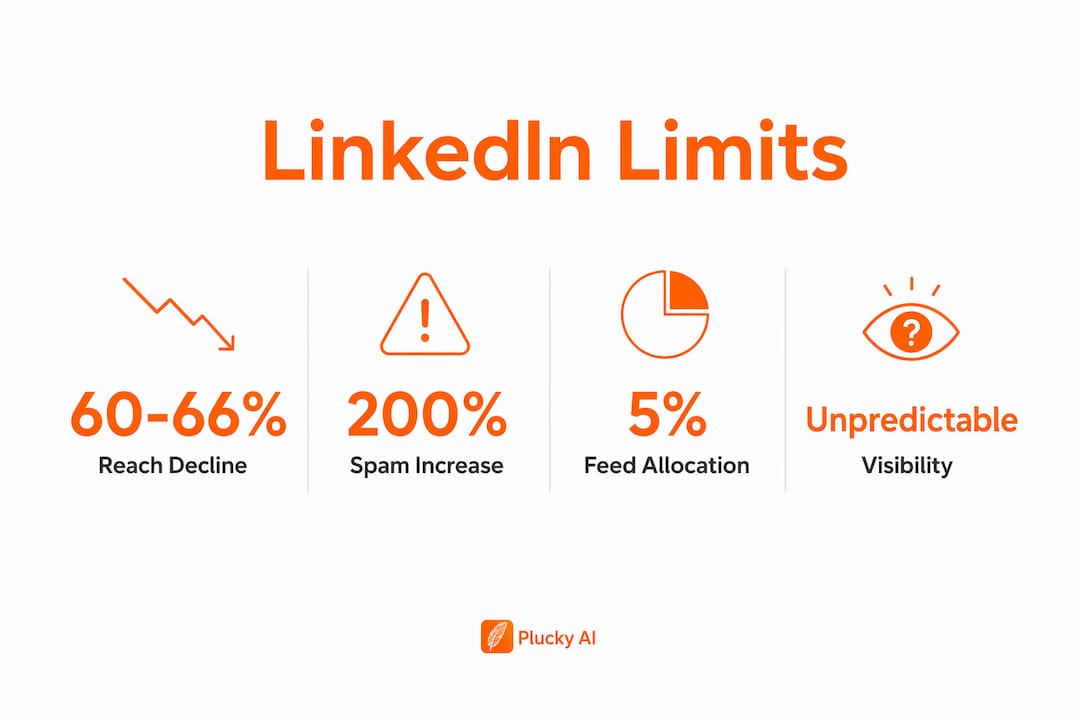
Visibility becomes unpredictable. LinkedIn's algorithm changes suppress content without warning. A posting cadence that generated strong reach in Q1 can become invisible by Q3 with no explanation. Visibility tied to engagement frequency creates an unstable professional presence that you cannot control or predict.
You build an audience you do not own. Every connection, follower, and piece of content on LinkedIn belongs to LinkedIn. If the platform restricts your account, changes its algorithm, or declines in relevance, your professional network does not transfer. This is the core problem with rented visibility: it disappears the moment the platform decides it should.
Performative posting creates burnout without proportional return. The pressure to post consistently, engage with comments, and maintain algorithmic favor is real. For IT professionals whose primary work is technical and not content-driven, this demand is a poor use of time. The return on effort is low when the algorithm deprioritizes the type of content you are best positioned to produce.
Missed opportunities in specialized channels are invisible by definition. IT roles that fill through referral networks and specialized communities never appear on LinkedIn. If you are not present in those channels, you do not know what you are missing. That is the most consequential limitation of LinkedIn for senior IT professionals: the best roles are not posted publicly.
Pro Tip: Audit your professional presence once per quarter. Check whether your GitHub is current, whether your personal website reflects your most recent work, and whether you have engaged in at least one technical community outside LinkedIn in the past 30 days.
What practical alternatives can IT professionals use alongside LinkedIn?
A multi-channel strategy does not require equal effort across every platform. It requires deliberate presence in the right places.
-
Build a personal website as your professional hub. A personal website is the only professional asset you fully own. It should include a bio, a portfolio of technical projects, links to published work, and contact information. Tools like GitHub Pages or a simple WordPress or Webflow site require minimal maintenance and provide a permanent, searchable presence that no algorithm can suppress.
-
Maintain an active GitHub profile. For IT and cybersecurity professionals, GitHub is a verified portfolio. Recruiters and hiring managers in technical roles treat active GitHub profiles as direct evidence of skill. Pinned repositories, contribution history, and well-documented projects communicate more than any LinkedIn headline.
-
Engage in Stack Overflow or relevant technical forums. Consistent, high-quality answers on Stack Overflow build a searchable reputation that compounds over time. A strong Stack Overflow profile signals technical credibility to a community of peers and hiring managers who understand its value.
-
Publish long-form technical content on Medium or Substack. Technical articles on Medium rank in Google search results and remain discoverable for years. A post explaining a specific cybersecurity framework or a cloud migration approach can generate inbound interest from recruiters and peers long after it is published.
-
Activate your referral network directly. Diversifying presence with owned assets reduces single-platform risk, but direct relationships remain the highest-conversion channel. Reach out to former colleagues, attend virtual or in-person technical meetups, and participate in professional associations like ISACA, (ISC)², or local AWS user groups.
-
Use AI-powered job search tools to find roles and contacts that LinkedIn misses. Platforms like Pluckjobs combine role discovery with hiring manager contact data, which means you can identify the right opportunity and reach the right person directly rather than submitting into a black hole. This is particularly effective for IT and cybersecurity roles that are not widely advertised.
-
Maintain LinkedIn as one channel, not the only channel. LinkedIn remains indispensable because no alternative matches its scale as a career marketplace. The goal is not to abandon it. The goal is to stop treating it as sufficient.
A practical sequence for IT professionals starting this shift: spend the first two weeks updating your GitHub and personal website, then spend one hour per week engaging in one technical community outside LinkedIn, then add one long-form content piece per month on Medium or Substack. This cadence builds multi-platform presence without requiring a full-time content operation.
Key takeaways
LinkedIn alone is insufficient for IT professionals because its algorithm suppresses technical content, its profiles lack verification, and its highest-value roles fill through channels it does not reach.
| Point | Details |
|---|---|
| Organic reach is declining | Company pages receive only 5% of feed allocation; personal profiles must carry the full weight. |
| Algorithm penalizes technical depth | LinkedIn rewards emotional engagement over substantive IT expertise, reducing visibility for technical content. |
| Owned assets outperform rented ones | GitHub profiles and personal websites retain value regardless of platform algorithm changes. |
| Best IT roles bypass LinkedIn | High-demand roles fill through referrals and specialized communities before appearing on public job boards. |
| Multi-channel presence reduces risk | Combining LinkedIn with GitHub, Stack Overflow, and direct outreach creates a durable professional presence. |
The uncomfortable truth about LinkedIn in 2026
I have watched IT professionals spend significant time optimizing their LinkedIn profiles, posting consistently, and chasing engagement metrics, only to find that the roles they actually wanted came from a GitHub connection, a Slack community referral, or a direct email to a hiring manager they found through a contact database.
LinkedIn is not broken. It is just misunderstood. Most IT professionals treat it as a job search engine when it functions better as a credibility signal. Recruiters use it to confirm what they already suspect about a candidate, not to discover talent from scratch. That distinction changes how you should invest your time.
The professionals I have seen advance fastest in IT careers are not the ones with the most LinkedIn followers. They are the ones with the most legible technical footprint: clean GitHub histories, published technical writing, and a reputation in at least one specialized community. LinkedIn is where they point people after the relationship already exists.
The anti-automation policies on LinkedIn also create friction for IT professionals who want to use AI-powered tools to scale their outreach. That friction is pushing serious job seekers toward platforms and tools that support smarter, more targeted approaches. The shift is already happening. The question is whether you are ahead of it or behind it.
My advice: keep your LinkedIn profile current and professional, but stop treating it as your primary career investment. Put that energy into assets you own and communities where your technical work speaks for itself. Read more about building a long-game job search strategy that compounds over time rather than chasing algorithmic visibility.
— Diego
Go further than LinkedIn with Pluckjobs
LinkedIn shows you job listings. Pluckjobs shows you the job, the hiring manager, and the path to reach them directly.
Pluckjobs is an AI-powered job search platform built specifically for IT and cybersecurity professionals. It combines Apollo contact intelligence with SerpAPI-powered role discovery to surface precision job matches alongside the hiring manager outreach data you need to act on them. No more submitting into applicant tracking systems and waiting. Pluckjobs also generates tailored resumes matched to specific roles, so every application is positioned correctly from the start. If you are ready to move beyond passive LinkedIn visibility, start with Pluckjobs and find the role, find the person, and get hired.
FAQ
Why is LinkedIn not enough for IT job seekers?
LinkedIn's algorithm suppresses technical content, profiles lack verification, and the highest-value IT roles frequently fill through referral networks and specialized communities before appearing on the platform. It functions as a credibility check, not a complete job search strategy.
What are the biggest limitations of LinkedIn for IT professionals?
The core limitations include declining organic reach, an algorithm that favors emotional engagement over technical depth, a 200% increase in spam, no credential verification, and content that loses visibility within days rather than building long-term discoverability.
Is LinkedIn enough for networking in cybersecurity and IT?
LinkedIn is a useful starting point but insufficient on its own. Cybersecurity and IT roles frequently fill through GitHub activity, Stack Overflow reputation, professional associations like ISACA and (ISC)², and direct referrals from within technical communities.
What platforms should IT professionals use alongside LinkedIn?
GitHub, Stack Overflow, Medium, Substack, and a personal website each address gaps that LinkedIn leaves open. GitHub provides verified technical proof, Stack Overflow builds searchable community credibility, and owned assets like personal websites retain value regardless of algorithm changes.
How do I reduce my dependency on LinkedIn for career growth?
Build owned assets first: a personal website and an active GitHub profile. Then engage consistently in one technical community outside LinkedIn. Add long-form technical content on Medium or Substack monthly. Use AI-powered tools like Pluckjobs to identify roles and hiring manager contacts that LinkedIn's job listings do not surface.