
TL;DR:
- A hiring manager owns the role, leads candidate evaluation, and remains responsible for onboarding the new employee. They differ from recruiters, who manage sourcing and logistics, by focusing on long-term team fit and performance. Engaged hiring managers significantly influence hiring success, as candidates consider their involvement the key factor in acceptance decisions.
A hiring manager is defined as the person who owns a specific open role, leads candidate evaluation, and makes the final hiring decision. This is distinct from a recruiter, who manages the process and pipeline. Hiring manager involvement is the single largest factor determining whether a hire succeeds or fails. Job seekers who understand this dynamic gain a real edge. They know who holds decision-making authority, what that person cares about, and how to communicate accordingly. Pluckjobs is built around exactly this insight, giving IT and cybersecurity professionals direct access to hiring manager contact data before they ever apply.
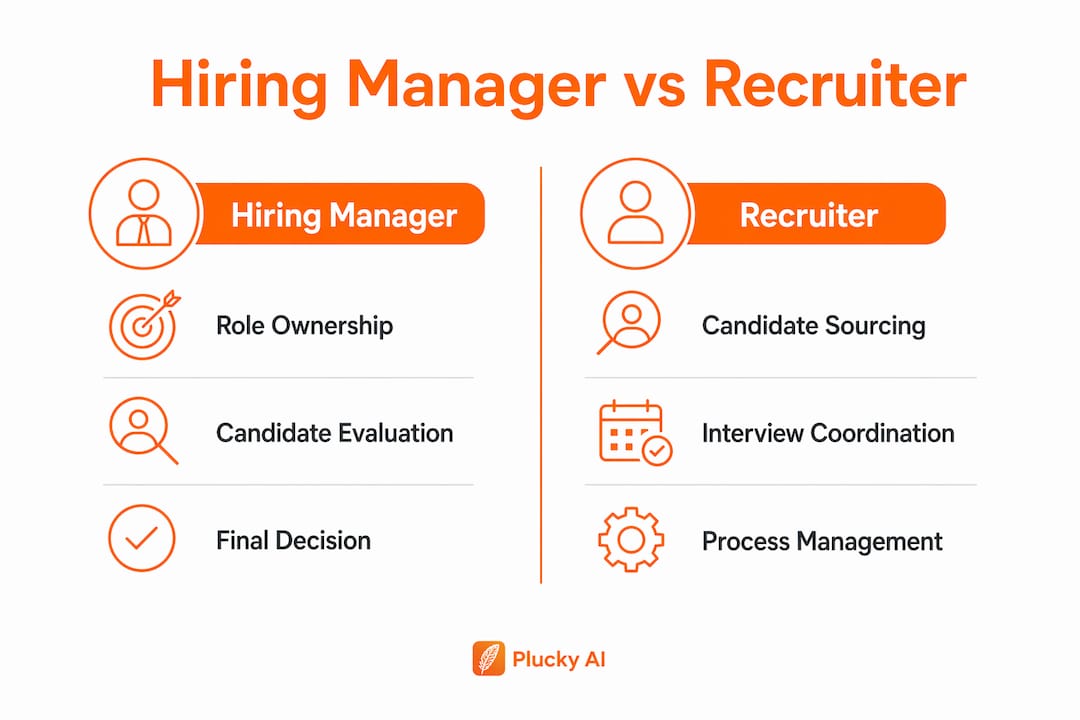
What is a hiring manager and what do they own?
A hiring manager is the functional leader accountable for a role from the moment it opens to the point where the new employee reaches full productivity. The title itself is not a job title. It describes a responsibility. A software engineering director hiring a backend developer is a hiring manager. So is a CISO filling a security analyst seat.

The scope of that accountability is broader than most job seekers realize. Hiring managers define success criteria, write or approve the job description, conduct interviews, assess team fit, and own onboarding. In small businesses with 5–50 employees, the hiring manager is often the founder or CEO, accountable for the entire workflow from requisition to day 90.
The "true owner" framing matters here. A recruiter can fill a role with a technically qualified candidate. Only the hiring manager can determine whether that candidate will thrive on the specific team, under a specific manager, in a specific culture.
What are the key responsibilities of a hiring manager?
Hiring manager responsibilities span the full arc of the hiring process, not just the interview stage. Job seekers often assume the recruiter runs everything. The reality is that the hiring manager drives every decision that actually matters.
Core responsibilities include:
- Defining the role. Writing or approving the job description, setting required skills, and establishing what success looks like in the first 90 days.
- Partnering with recruiters. Briefing the recruiter on must-have versus nice-to-have qualifications and agreeing on the sourcing strategy.
- Evaluating candidates. Conducting structured interviews, assessing technical fit, and judging cultural alignment with the team.
- Making the final call. Selecting the candidate and approving the offer, often in coordination with HR on compensation.
- Owning onboarding. Structured onboarding of 60–90 days leads to full productivity. Hiring managers who treat onboarding as someone else's job see higher early turnover.
The onboarding piece is consistently underestimated. Failure to treat onboarding as part of hiring causes turnover that wipes out the value of a good hire. The hiring manager's job does not end at offer acceptance.
Pro Tip: Before your interview, research the hiring manager by name. Understand their team's recent projects and current challenges. Frame your answers around how you solve their specific problems, not generic job description bullets.
How does a hiring manager's role differ from that of a recruiter?
The hiring manager and recruiter serve different functions and answer to different metrics. Confusing the two leads job seekers to pitch the wrong message to the wrong person.
Hiring managers have final selection authority. Recruiters are process experts who manage sourcing, scheduling, and candidate logistics. Misalignment between these two roles causes extended vacancies and poor hire quality.
| Function | Hiring manager | Recruiter |
|---|---|---|
| Primary focus | Role quality and team fit | Candidate volume and time-to-fill |
| Decision authority | Final hire decision | Candidate screening and shortlist |
| Interview role | Skills and culture assessment | Initial screening and logistics |
| Success metric | New hire performance at 90 days | Roles filled within target timeline |
| Candidate relationship | Long-term team integration | Pipeline management and communication |
Hiring manager focus on long-term team integration contrasts directly with recruiter focus on time-to-fill and candidate volume. This explains why hiring managers sometimes slow a process down. They are optimizing for fit, not speed.
For job seekers, this distinction has a practical consequence. The recruiter gets you into the process. The hiring manager decides whether you get the offer. Tailoring your outreach and interview preparation to each person's priorities is not optional. It is the difference between a callback and silence.
Why does hiring manager engagement determine hiring success?
Engaged hiring managers produce better hires, faster. Disengaged ones create delays, mismatches, and candidate dropouts. Hiring manager involvement level is the largest single factor in hiring success or failure.
The candidate experience data reinforces this. 83% of candidates say the hiring manager influences their offer acceptance decision more than any other factor. That number reflects something real. Candidates read the hiring manager as a proxy for what it will be like to work at the company. A disorganized, uncommunicative hiring manager signals a disorganized team.
The cost of getting this wrong is significant. A bad hire costs approximately $240,000 when accounting for recruiting costs and lost productivity. That figure makes the case for hiring manager engagement more clearly than any process argument.
Specific behaviors that signal disengagement include:
- Vague or shifting role requirements that confuse recruiters and candidates alike
- Slow or absent feedback after interviews, which stalls the pipeline
- Canceling or rescheduling interviews repeatedly, which signals low priority to candidates
- Delegating final decisions to HR without providing clear evaluation criteria
The hiring manager's communication cadence with recruiters directly impacts fill quality and retention outcomes. Weekly check-ins, prompt scorecards, and clear go/no-go decisions keep the process moving and candidates engaged.
What best practices make hiring managers more effective?
Effective hiring managers treat recruitment as a structured process, not an ad hoc task. The most common failure mode is treating hiring as an interruption to the real job rather than a core management responsibility.
- Write a clear role brief before sourcing begins. Define must-have skills, team context, and 90-day success metrics. Share this with the recruiter in a formal kickoff meeting, not a Slack message.
- Use structured interview scorecards. Structured scorecards rather than fragmented communication improve hiring outcomes. Every interviewer on the panel should evaluate the same criteria using the same scale.
- Provide feedback within 24 hours of each interview. Delayed feedback kills pipelines. Top candidates receive multiple offers. Slow feedback signals low interest and loses them to faster-moving employers.
- Align with the recruiter on a weekly cadence. A 30-minute weekly sync prevents the miscommunication that extends vacancies. Mismatch in priority between recruiters and hiring managers is a documented cause of poor hire quality.
- Own the first 90 days of onboarding. Set clear milestones, schedule regular check-ins, and assign a peer mentor. The hiring manager's involvement during onboarding directly predicts whether the new hire stays past year one.
Pro Tip: If you are a job seeker preparing for an interview, ask the hiring manager directly: "What does success look like in this role at 30, 60, and 90 days?" The answer tells you exactly what they are optimizing for and gives you a framework to close the interview strongly.
For IT and cybersecurity professionals navigating this process, understanding common IT job search mistakes related to hiring manager interactions can prevent avoidable rejections.
Key Takeaways
The hiring manager is the final decision-maker who owns the role, leads candidate evaluation, and remains accountable for the new hire's success through the first 90 days of onboarding.
| Point | Details |
|---|---|
| Hiring manager definition | The role owner and final decision-maker, distinct from the recruiter who manages process and pipeline. |
| Core responsibilities | Define role requirements, conduct interviews, make the hire decision, and own 60–90 day onboarding. |
| Hiring manager vs. recruiter | Hiring managers optimize for fit and long-term performance; recruiters optimize for speed and volume. |
| Engagement impact | 83% of candidates say the hiring manager most influences their offer acceptance decision. |
| Best practice | Use structured scorecards and provide feedback within 24 hours to keep top candidates in the pipeline. |
The part of hiring management nobody talks about
Hiring is almost never a hiring manager's primary job. They are engineers, security leads, product directors, or operations heads who also happen to be responsible for building their team. That operational reality shapes everything about how they behave in a hiring process.
When a hiring manager goes quiet for a week, it is rarely indifference. It is a production incident, a board presentation, or a team crisis that took over the calendar. Job seekers who understand this dynamic respond with patience and a well-timed follow-up rather than frustration. That composure reads as professional maturity, which is exactly what a hiring manager is evaluating.
The recruiter-hiring manager relationship works best when both sides treat it as a genuine partnership. The recruiter brings market intelligence: what candidates expect, where the talent is, what competing offers look like. The hiring manager brings role clarity: what the team actually needs, what failure looks like, and what the culture rewards. When those two inputs combine well, the process moves fast and produces good hires.
My honest advice to job seekers is this: do not treat the hiring manager as an obstacle between you and the offer. Treat them as the person you are about to work for. Research their background. Understand their team's challenges. Show up to the interview ready to solve their problems, not just answer their questions. That shift in framing changes the entire dynamic of the conversation.
For IT and cybersecurity professionals, a solid job search strategy starts with identifying the right hiring manager before you apply, not after.
— Diego
How Pluckjobs connects you directly to hiring managers
Most job seekers apply through portals and wait. Pluckjobs is built for professionals who want to reach the actual decision-maker before the competition does.
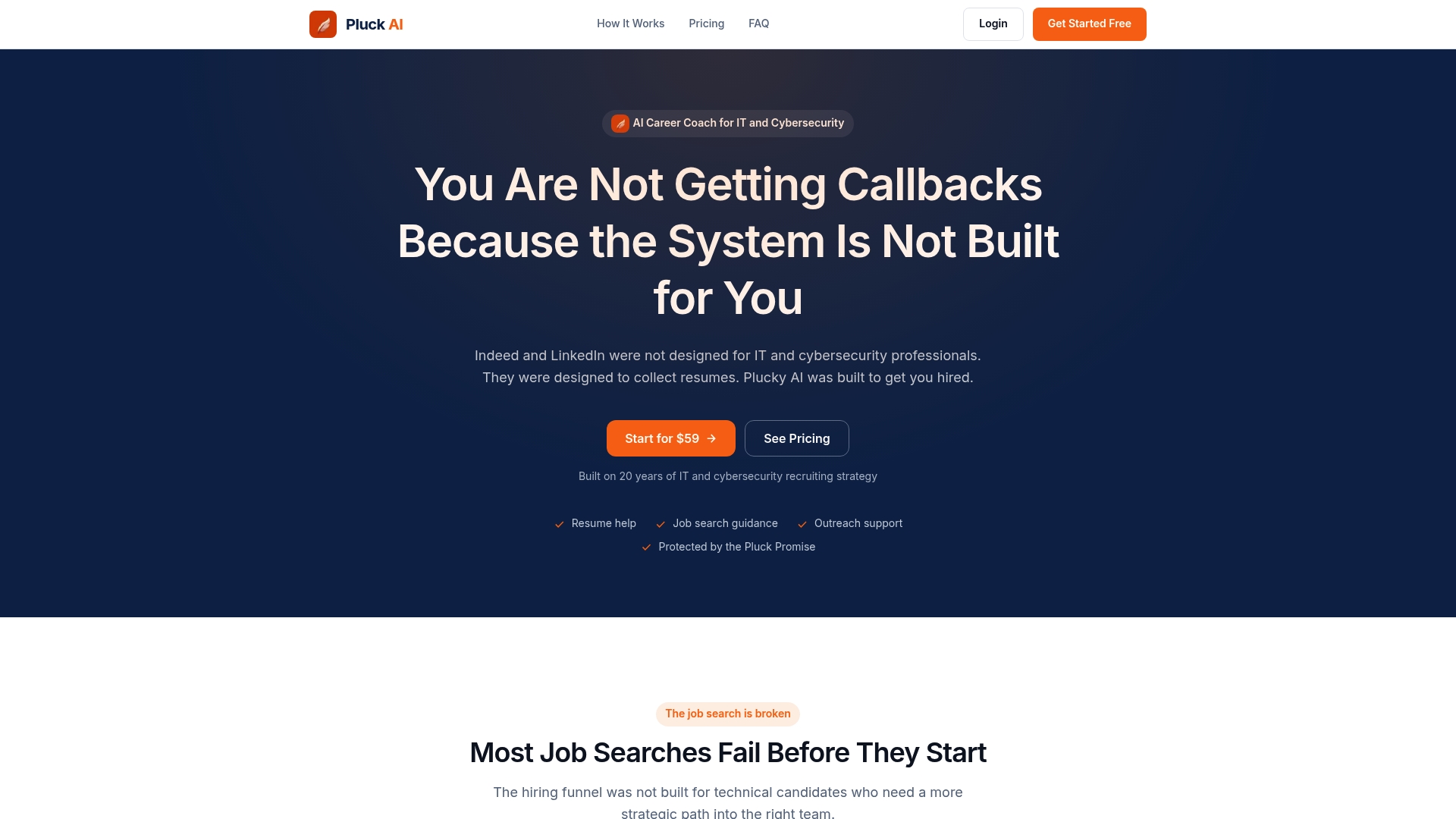
Pluckjobs combines Apollo contact intelligence with AI-powered role discovery to surface hiring manager outreach data alongside matched job listings. IT and cybersecurity professionals get the role, the contact, and a tailored resume in one place. No more cold applying to black-hole job boards. Start with Plucky AI and put your application directly in front of the person who makes the call.
FAQ
What is a hiring manager's main responsibility?
A hiring manager defines the role requirements, leads candidate evaluation, makes the final hiring decision, and owns the new employee's onboarding through the first 60–90 days.
How is a hiring manager different from a recruiter?
The hiring manager holds final decision authority and focuses on team fit and long-term performance. The recruiter manages sourcing, scheduling, and candidate logistics.
Does the hiring manager or HR make the final offer?
The hiring manager selects the candidate. HR typically handles the formal offer letter and compensation details, but the hiring decision itself belongs to the hiring manager.
Why does the hiring manager matter to job seekers?
83% of candidates say the hiring manager most influences their offer acceptance decision. Understanding their priorities and tailoring your pitch to their team's needs directly improves your chances.
What happens when a hiring manager is disengaged?
Disengaged hiring managers cause delayed feedback, unclear role requirements, and extended vacancies. Misalignment between hiring managers and recruiters is a documented cause of poor hire quality and increased time-to-fill.