
Contacting a hiring manager directly is one of the highest-leverage moves an IT or cybersecurity job seeker can make. Done right, it bypasses ATS filters, surfaces unadvertised roles, and puts your name in front of the person who actually decides who gets interviewed. The core benefits:
- Faster response — a targeted message often reaches a decision-maker in days, not weeks
- ATS bypass — your profile lands in an inbox, not a parsing queue
- Stronger fit signaling — you can lead with a GitHub repo, CTF rank, or CVE disclosure that no resume field captures
- Referral access — a brief conversation can turn into an internal referral, the single most reliable path to an offer
- Negotiation leverage — managers who recruit you directly tend to advocate harder for your compensation
The one risk worth naming upfront: contacting the wrong person, at the wrong frequency, in the wrong tone can close a door permanently. The rest of this guide shows you how to avoid that.
Key Takeaways
Direct hiring manager contact, when targeted and timed correctly, is the fastest path from application to conversation for IT and cybersecurity job seekers in the United States.
| Point | Details |
|---|---|
| Hidden job market is large | Roughly 70–80% of roles are filled through networking before public posting. |
| Apply first, then message | Reference your application in outreach to establish a credibility anchor. |
| Two messages maximum | Follow-ups account for a significant share of replies; stop after one follow-up if no response. |
| Target one or two contacts | Focused outreach reaches notably higher reply rates compared to mass-blasting approaches. |
| Pluckjobs accelerates the process | Pluckjobs delivers verified hiring manager contacts and outreach templates for IT and cybersecurity roles. |
Table of Contents
- Why direct hiring-manager contact works especially well in IT and cybersecurity
- When direct contact can backfire and how to avoid it
- How to find hiring manager contact information ethically
- A step-by-step outreach sequence that gets responses
- Four ready-to-use outreach templates for IT and cybersecurity
- U.S. legal and privacy considerations for job-seeker outreach
- How to measure outreach success and improve your approach
- When recruiters, referrals, or internal networking work better
- What direct outreach actually teaches you about the job market
- Pluckjobs gives you the contact intelligence to make outreach work
- Sources
- FAQ
Why direct hiring-manager contact works especially well in IT and cybersecurity
Hiring managers in technical roles think differently from recruiters. A recruiter optimizes for volume and speed-to-fill; a hiring manager optimizes for shipping velocity and team capability. When you reach a manager directly, you are speaking to someone who feels the pain of an open seat on their team and can immediately evaluate whether your background closes that gap.
According to CIAT, a large portion of job opportunities are in the hidden job market, filled through networking and referrals rather than public postings. For tech professionals, that figure translates into dramatically higher success rates compared with job-board applications alone. A role that never gets posted is a role where direct outreach is your only path in.
The hidden job market is not a myth. For IT and cybersecurity professionals, the majority of senior and specialized roles are filled before a job board listing ever goes live.
Technical evidence changes a manager's assessment faster than credentials alone. A link to a public GitHub repo with clean, documented code, a top-100 CTF leaderboard finish, a published CVE advisory, or an active TS/SCI clearance gives a manager a concrete reason to pull your resume from the pile. Direct outreach to hiring managers can deliver significantly higher initial inbox visibility compared with being one resume in a large application pile, accelerating time-to-interview.
When direct contact can backfire and how to avoid it
Most outreach fails not because the candidate was unqualified but because the message was off in tone, timing, or targeting. Here is what separates effective outreach from a negative signal:
Do:
- Research the manager's team, recent projects, and tech stack before writing a word
- Keep your first message under 150 words
- Apply through the official channel first, then reference that application in your outreach
- Ask for a conversation, not an interview
Don't:
- Attach a resume to a cold email (it triggers spam filters and feels presumptuous)
- Message the same person more than twice without a reply
- Contact multiple people at the same company simultaneously
- Use a generic template with no company-specific detail
Red-flag behaviors that consistently hurt candidates: spray-and-pray blasting (contacting dozens of managers with identical messages), ignoring a company's stated "apply here only" policy, and over-sharing personal circumstances in a first message.
Pro Tip: If a recruiter is already managing your candidacy at a company, pause direct manager outreach there. Reaching around a recruiter mid-process signals poor judgment and can get your application withdrawn. Check common IT job search mistakes to avoid similar missteps.
How to find hiring manager contact information ethically
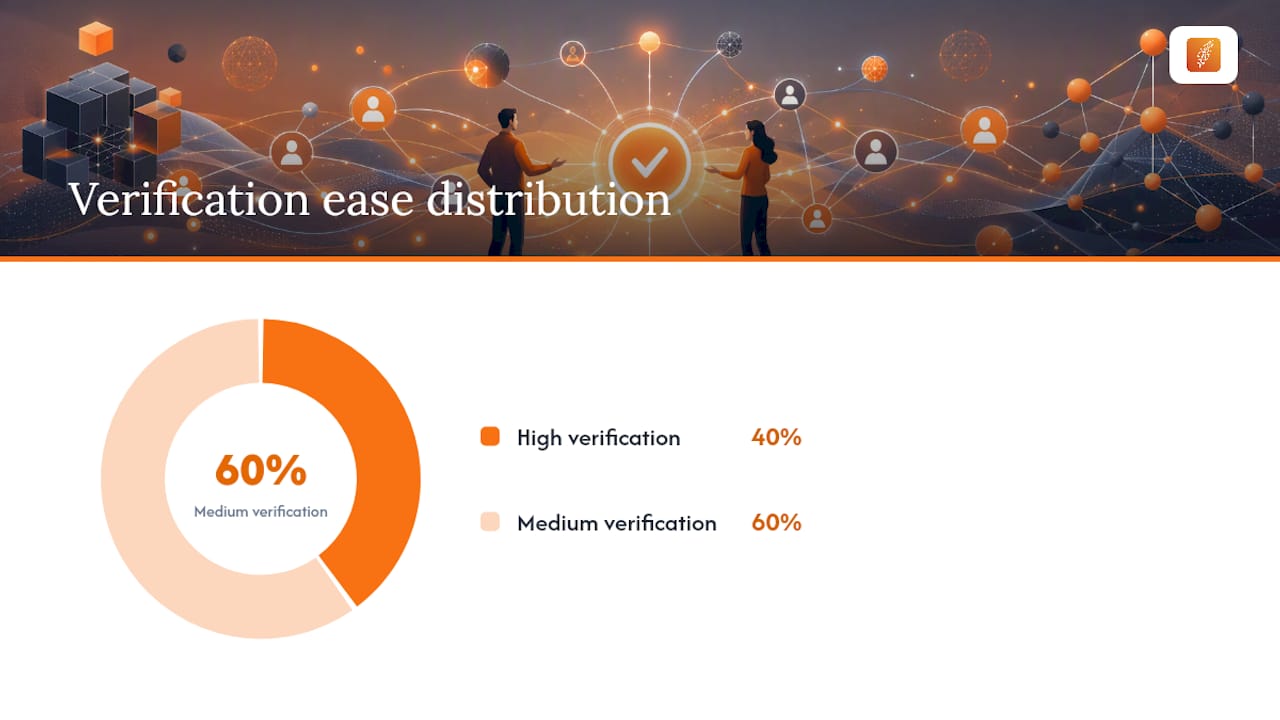
The most reliable sources for U.S.-based IT and cybersecurity roles, ranked by accuracy:
| Source | Best for | Verification ease |
|---|---|---|
| LinkedIn People search + title filters | Most roles; confirms active employment | High |
| Company team/about pages | Startups and mid-size firms | Medium |
| GitHub repo owner email | Open-source contributors and engineers | Medium |
| Conference speaker/CFP pages | Security researchers, DEFCON/Black Hat speakers | Medium |
| Email pattern tools (Hunter.io, Apollo) | Confirming address format once name is known | High |
Verification checklist before you send:
- Confirm the person's current title matches the role you are targeting
- Verify they are still employed at the company (LinkedIn "Open to work" or recent activity)
- Test the email pattern with a brief, non-sensitive note before sending your main message
- Never publish or share private contact data you discover
For IT and cybersecurity candidates, GitHub is underused. Many engineers list a contact email in their public repo profile or commit history. Conference CFP pages for events like DEF CON, RSA, and BSides often list speaker emails or LinkedIn profiles that are publicly indexed.
A step-by-step outreach sequence that gets responses
Targeted outreach to one or two contacts per company consistently outperforms mass-blasting. Analyses show focused sequences can reach notably higher reply rates compared to spray-and-pray approaches. Multi-channel sequences (email plus LinkedIn plus one follow-up) outperform single-channel attempts.
The sequence:
- Apply first (Day 1) — submit through the official channel. This gives you a credibility reference for your outreach message.
- Send your first message (Day 2–3) — email or LinkedIn DM referencing your application. Keep it under 150 words.
- One follow-up only (Day 7–10) — a single short reply to your original thread. Follow-ups account for a significant share of replies in targeted outreach datasets, so skipping this step costs you nearly half your potential responses.
- Stop — two messages is the limit. If there is no reply after the follow-up, move on.
Timing guidance:
- Best send days for U.S. recipients: Tuesday and Wednesday
- Best send times: 7–9 AM or 4–6 PM in the recipient's time zone
- Avoid Monday mornings and Friday afternoons
Subject-line examples:
Application in — [Your Name], CISSP, re: Senior Security EngineerQuick note on your cloud migration work — [Your Name]
Four ready-to-use outreach templates for IT and cybersecurity
Effective cold outreach leads with common ground, social proof, and a low-friction ask. Ask for a conversation, never an immediate interview.
Template 1 — Cold email, technical hire
Subject: Application in — [Name], AWS Solutions Architect, re: [Role]
Hi [Manager First Name],
I applied for [Role] yesterday and wanted to reach out directly. I recently led a zero-downtime migration of [X] microservices to EKS at [Company], cutting infrastructure costs by [Y]%. My GitHub ([link]) has the IaC templates from that project.
Would a 15-minute call this week make sense? Happy to work around your schedule.
[Name] | [LinkedIn] | [Portfolio]
Personalize: swap the migration detail for your strongest recent project. Add clearance level if relevant.
Template 2 — Cold email, security engineer
Subject: [Name] | Ranked top 50 CTF, re: [Security Role]
Hi [Manager First Name],
I applied for [Role] and wanted to follow up. I hold a OSCP and recently published a write-up on [CVE/advisory link] that your team's work on [specific product/area] reminded me of.
Open to a brief call if useful.
[Name] | [LinkedIn]
Personalize: link your CVE advisory, HackTheBox/CTF profile, or security disclosure.
Template 3 — LinkedIn connection message
Hi [Name] — I applied for [Role] at [Company] and noticed your work on [specific project/post]. I'd value connecting. [Your Name], [Cert/Title].
Template 4 — LinkedIn follow-up DM
Hi [Name], following up on my connection request. I applied for [Role] and wanted to make sure my application reached the right team. Happy to share more if helpful.
What to remove from every template: attachments, open-ended asks ("let me know if you're interested"), and personal circumstances.
U.S. legal and privacy considerations for job-seeker outreach
Job-seeker outreach is generally one-to-one professional communication, which sits outside most CAN-SPAM enforcement focus. That said, a few practical rules apply:
- Truthful headers: never misrepresent your identity or use a fake sender name
- No impersonation: do not pose as a recruiter, vendor, or employee of the target company
- Respect opt-out signals: if a manager replies asking you not to contact them again, stop immediately
- LinkedIn terms: do not use scraping tools that violate LinkedIn's Terms of Service; use the platform's native search and InMail features
- Data handling: do not store or share private contact information beyond your own job search tracking
CAN-SPAM's opt-out and commercial-email rules are primarily designed for bulk marketing. One-to-one job outreach is not bulk commercial email, but the professional norm of respecting a "no" is both legally prudent and career-protective.
How to measure outreach success and improve your approach
Treat outreach like a small experiment. Track these metrics in a simple spreadsheet:
| Metric | What it tells you |
|---|---|
| Reply rate | Message quality and targeting accuracy |
| Positive reply to interview rate | Fit between your pitch and the role |
| Time to first conversation | Channel and timing effectiveness |
| Conversion to interview | Overall sequence performance |
Simple CSV tracking template:
Date | Company | Manager Name | Channel | Message Version | Reply (Y/N) | Positive (Y/N) | Interview (Y/N)
A/B tests worth running:
- Subject line A vs. B (credential-led vs. project-led)
- Custom domain sender vs. free-mail sender (vendor data from CVHive shows custom domains tend to improve reply rates)
- CTA: "15-minute call?" vs. "Would it help if I sent more detail?"
Run each test across at least 10 sends before drawing conclusions.
When recruiters, referrals, or internal networking work better
Direct manager contact has the best ROI in specific situations. In others, a different channel is faster or safer:
- Large enterprise with a formal ATS process — a recruiter or internal referral is often more effective; managers at Fortune 500 firms are frequently instructed to route candidates through HR
- Confidential searches — if a role is not publicly posted and you learned of it through a third party, a recruiter introduction is the appropriate entry point
- High-volume hiring (e.g., SOC analyst cohorts) — these roles are typically managed by talent acquisition teams, not individual hiring managers
- Senior or executive roles — a warm introduction from a shared connection or a retained search firm often outperforms cold outreach at the VP level and above
The strongest approach for most mid-level IT and cybersecurity roles: apply through the official channel, send a targeted manager message referencing that application, and simultaneously ask a current employee for an internal referral. Three channels, one coordinated effort. Applying early before a role fills also increases the odds that your outreach lands when the manager is still actively evaluating candidates.
For a deeper look at how direct hiring-manager interaction shortens hiring cycles from the employer's side, the GENTY recruitment guide on speeding up tech hiring is worth reading.
What direct outreach actually teaches you about the job market
Most IT and cybersecurity job seekers underestimate how much outreach is a skill that compounds. The first five messages you send will be awkward and produce low reply rates. By message 20, you will have a subject line that works, a CTA that feels natural, and a clear sense of which companies respond to technical proof versus credentials.

The conventional wisdom says "apply and wait." The data says otherwise. Networking and referrals produce substantially higher success rates than job-board applications for tech professionals, and direct manager contact is the most direct form of that networking. The candidates who treat outreach as a repeatable, measurable process consistently reach conversations faster than those who rely on application volume alone.
One nuance worth flagging: outreach works best when you have something specific to say. A message anchored to a manager's recent conference talk, a published blog post, or a team's open-source contribution is not flattery; it is evidence that you pay attention. That signal matters to technical managers more than most job seekers realize.
Pluckjobs gives you the contact intelligence to make outreach work
Cold outreach fails most often not because of poor writing but because of poor targeting. Finding the right hiring manager, confirming their contact details, and personalizing a message for their specific tech stack takes time most job seekers do not have.
Pluckjobs combines Apollo contact intelligence with SerpAPI-powered role discovery to surface verified hiring manager contact data alongside matched IT and cybersecurity roles, all in one place. You get ATS-optimized resume rewrites, outreach templates calibrated to your profile, and a tracking layer so you know which messages are working. No more guessing whether your application was seen. Start your free trial at Pluckjobs and send your first targeted manager message today.
Sources
- Hidden Job Market in Tech: Find Unadvertised Jobs - CIAT
- How to do cold outreach to hiring managers. Part 2 of 2.
- Does Emailing a Hiring Manager Help in Sales Prospecting? | DripDraft
FAQ
What are the main benefits of direct hiring manager contact?
Direct contact bypasses ATS filters, surfaces unadvertised roles, and puts your name in front of the decision-maker faster than a job board application. For IT and cybersecurity candidates, it also lets you lead with technical proof like a GitHub repo or CVE advisory.
How many times should you follow up with a hiring manager?
Send one follow-up message, roughly seven to ten days after your first outreach. Follow-ups account for a significant share of replies in targeted sequences, but two messages total is the professional limit.
Is it legal to email a hiring manager directly in the United States?
One-to-one professional job outreach is legal in the United States and sits outside CAN-SPAM's bulk commercial email focus. Use your real identity, respect any request to stop contact, and do not use scraping tools that violate platform terms.
When should you use a recruiter instead of contacting a manager directly?
Use a recruiter when applying to large enterprises with formal ATS processes, confidential searches, high-volume hiring cohorts, or executive roles where a warm introduction carries more weight than cold outreach.
How does Pluckjobs help with hiring manager outreach?
Pluckjobs combines Apollo contact intelligence with SerpAPI role discovery to deliver verified hiring manager contact data, ATS-optimized resumes, and outreach templates tailored to IT and cybersecurity profiles, all in one platform.