
What are the main types of IT recruiter outreach?
Recruiters use five core outreach methods to reach IT and cybersecurity candidates: email, LinkedIn messages, phone calls, multi-channel sequences, and trigger-based outreach timed to career events. Each channel serves a different purpose, and knowing the difference helps you decide which messages deserve a reply.

Email leads by a wide margin: 79.2% of candidates prefer it as the primary contact channel. LinkedIn InMail runs second, phone calls are reserved for senior or hard-to-fill roles, and multi-channel sequences combine all three in a structured cadence.
Quick reference: outreach types at a glance
- Email outreach: Primary channel, fully automated, unlimited follow-ups, best for passive candidates
- LinkedIn InMail: Supplement channel, credit-limited, higher per-message reply rate when personalized
- Phone calls: High-effort, used mid-sequence for priority roles, not a first touch
- Multi-channel sequences: Coordinated email, LinkedIn, and phone cadences over 2–3 weeks
- Trigger-based outreach: Timed to job changes, promotions, or company events for maximum relevance
Personalization and compensation transparency separate quality outreach from noise. Recruiters who include a salary range and open with a specific observation about your background consistently get more replies than those who send generic templates.
Table of Contents
- How recruiters actually reach IT and cybersecurity candidates
- How AI is changing recruiter outreach for IT candidates
- How to respond to recruiter outreach effectively
- Pluckjobs gives IT professionals a sharper job search
- Key Takeaways
- FAQ
How recruiters actually reach IT and cybersecurity candidates
Email outreach
Email is the workhorse of IT talent acquisition. A well-crafted cold email runs 50–125 words, names one specific detail about your background, states the compensation range, and closes with a low-friction ask like "Would you be open to a brief call?" Omitting salary information is consistently called out as a reply-killer for passive candidates.
Follow-up timing matters. Most replies arrive between the second and fourth message, so a recruiter who stops after one attempt is leaving responses on the table. A standard sequence runs 4–5 touches for email-only roles, with high-value positions extending to 12–15 touches across channels over roughly three weeks.
LinkedIn outreach
LinkedIn InMail works best as a day-3 supplement to email, not as your primary channel. A personalized connection request with a message pulls a meaningfully higher reply rate than one sent without any message. The constraint is real: recruiters cannot follow up unless you reply first, and credits are limited, which caps volume.
Generic InMail is easy to spot. If the message says "I came across your profile" with no specific detail, it was likely sent to hundreds of people. Personalized InMail that references a specific project, certification, or recent role change signals that a human actually reviewed your background.
Phone outreach
Phone calls carry the highest signal of any channel, but they don't scale. For VP-level and above roles, hiring-manager-sent outreach lifts reply rates 15–30% over recruiter-led contact. For everyone else, a direct call typically appears at touch 4 or 5 in a sequence, after email and LinkedIn have already established context. An unsolicited call as a first touch is almost always intrusive.
Multi-channel sequences
A coordinated sequence looks like this: personalized email on day 1, LinkedIn connection request on day 3, follow-up email on day 7, phone call on day 10 for high-priority roles, and a closing email around day 21. Trigger-based outreach timed to a job change or company restructure outperforms cold sequences because it reaches you at a moment when you're already reconsidering.
Personalized vs. generic outreach: what to look for
- Personalized: References a specific project, skill, or career milestone; includes compensation range; asks for a conversation, not a 30-minute calendar block
- Generic: Opens with "I came across your profile"; no salary information; pushes immediately to a formal interview; identical language to every other message in your inbox
How to spot spam vs. genuine recruiter outreach
Genuine outreach names the company, describes the technical challenge, and respects your time with a short message. Red flags include: no company name, vague role descriptions, pressure to apply immediately, requests for personal information before any conversation, and messages that read like mass emails with your name pasted in.
How AI is changing recruiter outreach for IT candidates
AI has shifted from a back-office screening tool to an active participant in how recruiters find and contact you. Modern AI-powered platforms automate cadence, channel sequencing, and candidate data enrichment, while keeping the personalization signal human or drawn from real CRM context. Automated outreach that appears personal achieves higher reply rates than generic templates because candidates believe a human reviewed their profile before sending.
| Outreach method | AI role | What candidates prefer |
|---|---|---|
| Drafts message, automates follow-up cadence | Personalized opener, salary range included | |
| LinkedIn InMail | Routes contacts by connection status | Specific reference to background or work |
| Phone | Schedules call steps in sequence | Reserved for senior roles, not first touch |
| Trigger-based | Monitors job changes, company events | Timely, relevant to current career moment |
| Multi-channel sequence | Manages channel order and timing | Consistent, non-repetitive across channels |
IT and cybersecurity candidates expect recruiters to act as advisors, not just message-senders. Top IT talent reject processes that are too slow or lack transparency about technical challenges and timelines. Speed, clarity about the role, and respect for your technical expertise are the three signals that tell you a recruiter is worth engaging.
Pro Tip: When a recruiter reaches out via AI-assisted tools, the quality of their personalization still reflects whether they invested time in your profile. A message that references your GitHub contributions or a specific certification you hold is a strong signal the recruiter did the work. Use that detail as your first filter.
Pluckjobs uses Apollo contact intelligence and SerpAPI-powered role discovery to surface hiring manager outreach data, so IT professionals can use AI tools to engage on their own terms rather than waiting for the right recruiter to find them.
How to respond to recruiter outreach effectively
Knowing the types of outreach is only half the equation. Responding well is where most IT candidates leave opportunity behind.
Evaluate before you reply
- Does the message name the company and describe a real technical challenge?
- Is a compensation range included or offered on request?
- Does the ask feel low-pressure, or is it pushing you straight to an application?
- Is the recruiter's profile verifiable on LinkedIn with a real employment history?
How to engage with different outreach types
- Email: Reply within 24–48 hours if interested. A short, direct response confirming interest and asking one clarifying question about the role or team moves the conversation forward efficiently.
- LinkedIn InMail: Accept the connection if the message is personalized and the recruiter's profile is credible. Reply with a brief note indicating your level of interest.
- Phone calls: If you miss an unsolicited call, check for a voicemail with a company name and role context before calling back. No voicemail from an unknown number is a skip.
- Multi-channel sequences: If you've received the same message across email and LinkedIn, that's a coordinated sequence. One reply on your preferred channel is enough.
Discovery calls shift the recruiter's role from pitching to understanding your motivations, compensation expectations, and timing. Share that information honestly. A recruiter who captures your real priorities will present you more accurately to the hiring manager.
Common pitfalls to avoid
- Ignoring outreach from recruiters at companies you'd genuinely consider, just because the first message was generic
- Sharing your full resume before understanding the role, company, and compensation range
- Committing to a timeline before you know the interview process length
- Responding to every message equally, rather than prioritizing outreach that includes specific role details and salary transparency
Your job seeker value proposition shapes how recruiters perceive your fit from the first reply. Treat early conversations as two-way evaluations, not auditions. Knowing how to reach hiring managers directly also gives you leverage when recruiter outreach stalls.
Pluckjobs gives IT professionals a sharper job search
IT and cybersecurity job seekers who wait for the right recruiter to find them are playing a slow game. Pluckjobs flips that dynamic.
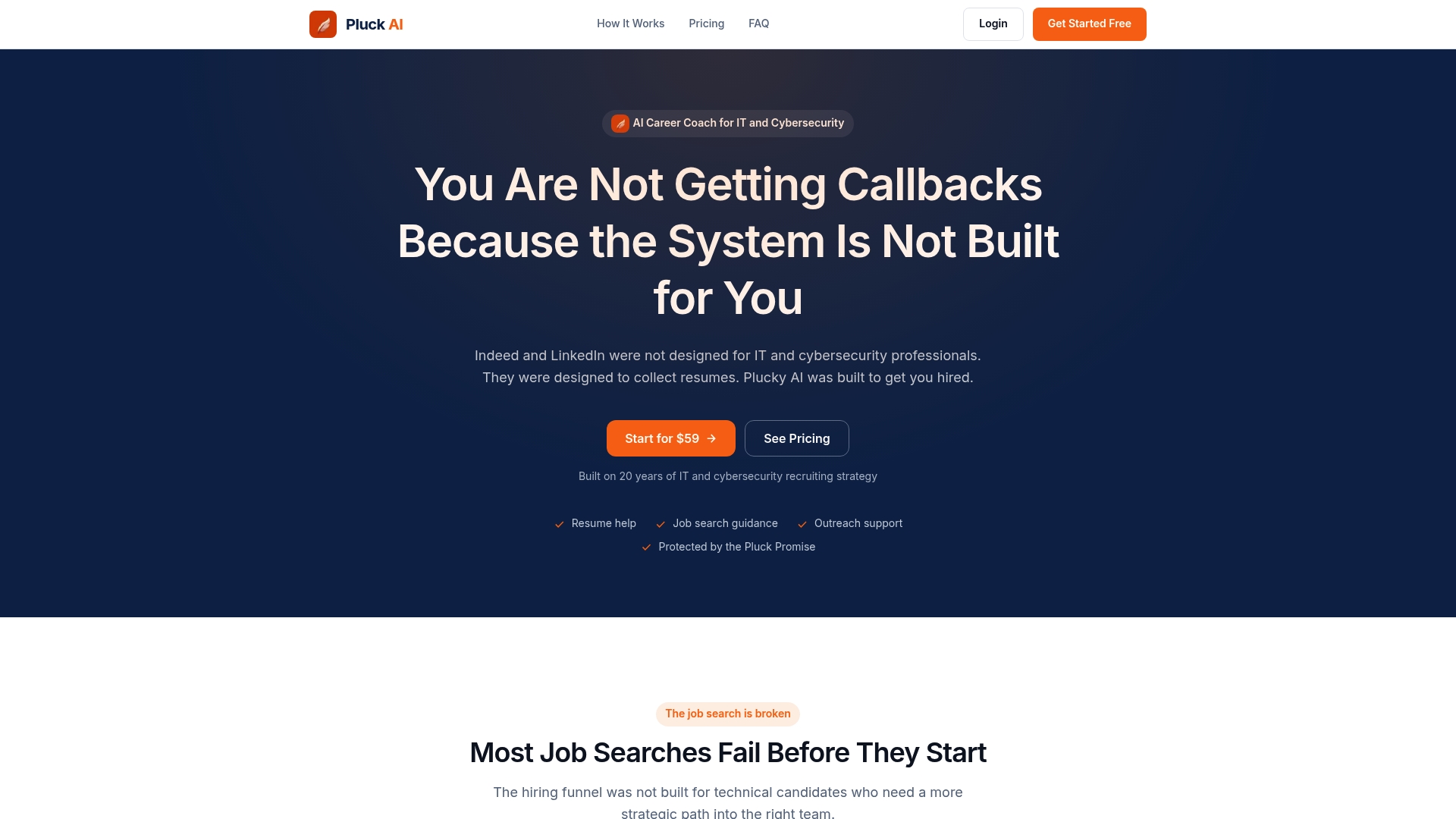
Plucky AI combines Apollo contact intelligence with SerpAPI-powered role discovery to surface precision job matches, hiring manager contact data, and tailored resumes in one platform. You get the outreach data recruiters use, applied directly to your job search. No cold applying, no guessing who to contact. The platform also surfaces recruiter response insights that help you time your outreach for maximum impact. Start your search at Pluckjobs and put the right data behind every move you make.
Key Takeaways
Understanding recruiter outreach types gives IT and cybersecurity job seekers the ability to filter quality contacts, respond strategically, and engage with the right opportunities faster.
| Point | Details |
|---|---|
| Email is the primary channel | 79.2% of candidates prefer email; it supports unlimited follow-ups and full automation. |
| Compensation transparency drives replies | Recruiters who omit salary ranges consistently see lower response rates from passive IT candidates. |
| Most replies come early in sequences | Many candidate responses arrive between the second and fourth message in a sequence. |
| Hiring manager outreach lifts engagement | Direct outreach from hiring managers can increase reply rates on senior and VP-level roles. |
| Pluckjobs reverses the dynamic | Plucky AI surfaces hiring manager contact data and role matches so IT professionals can initiate outreach themselves. |
FAQ
What are the most common types of IT recruiter outreach?
Email, LinkedIn InMail, phone calls, multi-channel sequences, and trigger-based outreach are the five main types. Email is the most widely used, with 79.2% of candidates preferring it as the primary contact channel.
How can I tell if a recruiter message is genuine or spam?
Genuine outreach names the company, references a specific detail about your background, and includes or offers compensation information. Messages with no company name, vague role descriptions, or immediate pressure to apply are low-quality or automated spam.
How many times will a recruiter typically follow up?
Most recruiters send 4–5 touches for standard roles, with high-value positions receiving up to 12–15 touches across channels over about three weeks. Stopping after four unanswered attempts is considered best practice to avoid crossing into spam territory.
Should I respond to recruiter outreach even if I'm not actively job hunting?
Yes, if the role and company are relevant. IT talent acquisition increasingly targets passive candidates, and a brief, honest reply preserving the relationship costs little and keeps future options open.
How does Pluckjobs help with recruiter outreach?
Pluckjobs gives IT and cybersecurity professionals hiring manager contact data and AI-matched role discovery through Plucky AI, so candidates can initiate targeted outreach rather than waiting to be found.