
TL;DR:
- Boolean search allows IT professionals to filter job postings precisely using operators like AND, OR, and NOT, but platform limitations and resets affect efficiency. Combining Boolean techniques with targeted outreach and tailored resumes increases the chances of securing relevant roles and referrals. Successful job searching in 2026 relies on using Boolean as a discovery tool within a broader, strategic approach focused on conversion and research.
Boolean search is a targeted filtering technique that uses logical operators, AND, OR, and NOT, to cut through thousands of irrelevant IT job postings and surface only the roles that match your actual skills. Most IT job seekers type a job title into a search bar and scroll through pages of mismatched results. Boolean search changes that entirely. Understanding how boolean search finds IT jobs means you stop browsing and start targeting. This guide covers the operators, the platforms, the practical strategies, and the real limitations you need to know before your next search session.
How Boolean search finds IT jobs: operators explained
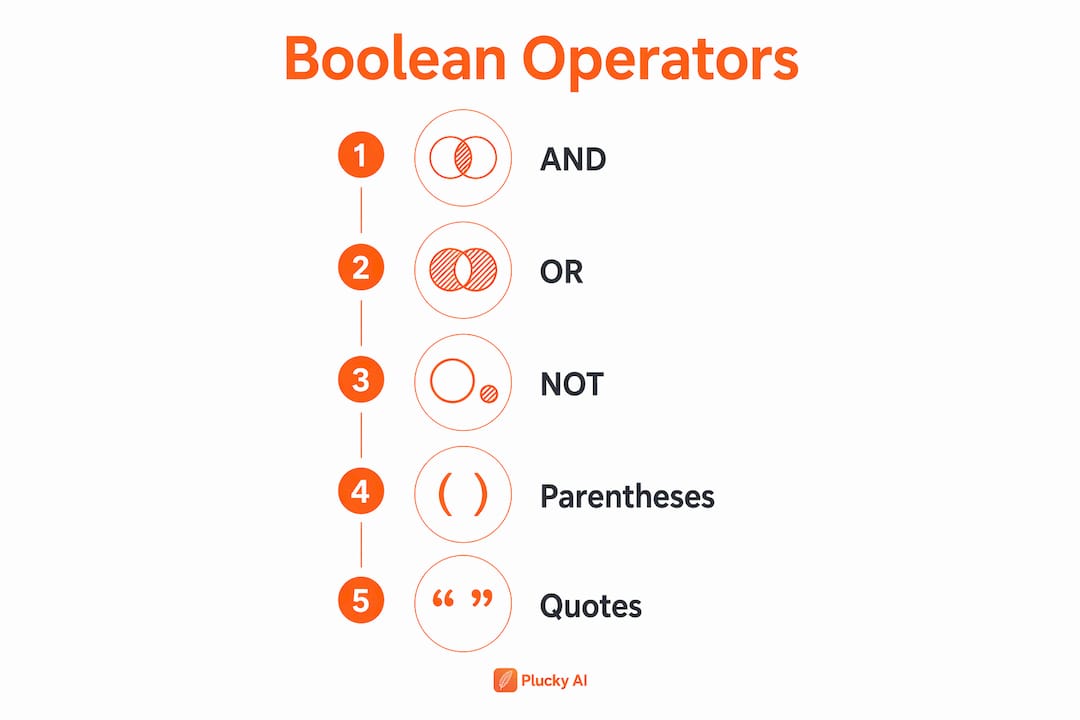
Boolean search works by combining keywords with three core operators that tell a search engine exactly what to include, expand, or remove from results.

AND narrows your search. Every term connected by AND must appear in the result. Searching "Python Developer" AND "AWS" returns only listings that mention both. This is your primary tool for matching specific skill combinations to a role.
OR widens your search. At least one of the connected terms must appear. Searching "DevOps Engineer" OR "Site Reliability Engineer" captures both job titles at once. IT roles carry many title variations, and OR is how you account for all of them without running separate searches.
NOT removes noise. Adding NOT "Junior" or NOT "contract" strips out listings you would never apply to anyway. This is the operator most job seekers skip, and skipping it costs real time.
Two additional tools sharpen every query:
- Quotation marks lock in exact phrases.
"Cloud Security Engineer"returns that exact title, not scattered results containing "cloud," "security," and "engineer" separately. - Parentheses group logic.
("Software Engineer" OR "Developer") AND "Python" NOT "Junior"is a complete Boolean string that narrows results to senior Python roles across two title types.
Pro Tip: Build your Boolean strings in a plain text file and save them. Platforms reset filters every session, so having your strings ready to paste saves significant time.
What platforms support Boolean search for IT roles?
Platform support for Boolean search varies widely, and knowing the gaps prevents wasted effort.
LinkedIn supports AND, OR, NOT, quotes, and parentheses in its native search bar. The catch is that LinkedIn Boolean resets each session, meaning every time you return, you rebuild your query from scratch. Free accounts also face limits on query complexity and result depth. LinkedIn Recruiter removes those limits, but it is a paid product aimed at recruiters, not job seekers.
Indeed and Glassdoor offer basic keyword search but lack persistent exclusion filters. You can type Boolean syntax into their search bars with mixed results. Neither platform reliably honors NOT operators across all query types, and neither saves your filters between sessions.
Google X-Ray search fills the gap. Combining Google's site: operator with Boolean logic lets you search job boards more flexibly than their native interfaces allow. A query like site:linkedin.com/jobs "Python Developer" NOT contract runs Google's Boolean logic against LinkedIn's indexed pages. The results are often more accurate than LinkedIn's own search.
One important caveat: LinkedIn X-Ray search was significantly reduced in 2024. Only name and current job title remain reliably indexed. Skills-based X-Ray queries on LinkedIn now return far fewer results than they did two years ago. GitHub's advanced search, however, remains strong for identifying technical talent and open roles in developer communities.
Pro Tip: Use Google X-Ray on GitHub with queries like site:github.com "hiring" AND "Python" AND "remote" to find engineering teams actively recruiting before a formal job posting goes live.
What are practical Boolean strategies for finding IT jobs worth applying to?
Finding a listing is only half the work. Finding a listing worth your time requires a more deliberate approach.
-
Match at least 70% of the listed skills. Skills-based hiring now dominates the market, with 53% of employers dropping degree requirements in favor of demonstrated ability. Build your Boolean strings around the skills you actually hold, not aspirational ones.
-
Use multiple title variations in one query. A single role might be posted as "Security Analyst," "Information Security Analyst," or "Cybersecurity Analyst" depending on the company. Combine them with OR:
("Security Analyst" OR "Information Security Analyst" OR "Cybersecurity Analyst") AND "SIEM". -
Exclude roles that don't fit your level. Add
NOT "Junior" NOT "Entry Level" NOT "Intern"to every senior-level search. This single adjustment removes a large share of irrelevant results immediately. -
Filter for recency. Boolean finds the listing. Platform date filters determine whether the role is still actively hiring. Always combine Boolean queries with a "posted in the last 7 days" filter to avoid applying to roles that are already filled.
-
Use Boolean to find referral targets, not just job postings. Search LinkedIn profiles with Boolean to identify people at target companies who hold the role you want. Reaching out to them before applying puts you ahead of the applicant pool. Referred candidates are 4x more likely to receive an offer than cold applicants.
A well-built IT job search strategy treats Boolean as the discovery engine and referrals as the conversion mechanism.
What are the real limitations of Boolean search in 2026?
Boolean search is a discovery tool. It is not a complete job search strategy, and treating it as one leads to frustration.
- Platform resets kill consistency. Most major job boards do not persist Boolean filters between sessions. You rebuild your query every time you log in. This is not a minor inconvenience. It compounds over weeks of searching.
- LinkedIn X-Ray is weaker than it was. Since 2024, only name and current title are reliably indexed on LinkedIn X-Ray. Skills-based queries return a fraction of what they once did. Relying on X-Ray alone for skills matching now produces incomplete results.
- Boolean cannot measure fit beyond keywords. It finds listings that contain your search terms. It cannot assess company culture, team trajectory, or whether the role actually matches your career goals. Those judgments still require human research.
- Finding the listing is not enough. Boolean search is a discovery tool that surfaces listings, but a tailored resume is what gets you an interview. Mass-applying generic resumes yields roughly an 8% interview rate. Tailored resumes reach 35% or higher. Boolean gets you to the right door. Your resume gets you through it.
Pro Tip: Pair every Boolean search session with a resume review. If your resume does not contain the exact keywords from the job description, an ATS will filter you out before a human reads a single line.
How to integrate Boolean search into a broader IT job search strategy
Boolean search works best as one layer inside a larger, structured approach.
- Apply to 10–15 tailored roles per week, not hundreds. Targeted applications consistently outperform mass applying. Quality beats volume at every stage of the hiring process.
- Mirror your Boolean keywords in your resume. The terms you use to find a job are the same terms an ATS uses to screen your application. If your Boolean string includes "Kubernetes" and "CI/CD," those exact terms need to appear in your resume. AI-friendly resume formatting reinforces this alignment.
- Update your Boolean strings weekly. Job markets shift. New titles emerge. A string that worked well in january may miss a wave of new postings by march. Treat your queries as living documents.
- Use Boolean to build a target company list. Search for companies that consistently post roles matching your skills. Then research those companies directly, follow their hiring managers on LinkedIn, and engage before a role opens.
- Combine Boolean with GitHub and LinkedIn profile optimization. Recruiters run Boolean searches too. If your LinkedIn headline and GitHub bio contain the same keywords you search for, you become discoverable from both sides of the equation.
Tracking which Boolean strings produce the best results is a discipline in itself. Job search metrics like application-to-interview rate and source of best leads tell you which queries are worth keeping and which to retire.
Key Takeaways
Boolean search is the most precise discovery method available to IT job seekers, but it requires tailored resumes, referral outreach, and consistent iteration to convert listings into offers.
| Point | Details |
|---|---|
| Master the three operators | AND narrows, OR widens, and NOT excludes. Combine all three in every serious query. |
| Platform filters reset | Save Boolean strings externally. No major job board persists filters between sessions. |
| X-Ray search has limits | LinkedIn X-Ray only indexes name and current title reliably since 2024. Use Google and GitHub to compensate. |
| Quality beats volume | Apply to 10–15 tailored roles weekly. Tailored resumes reach a 35%+ interview rate versus 8% for generic ones. |
| Boolean is a starting point | Use it to find listings and referral targets, then rely on resume tailoring and networking to close the gap. |
Boolean search is a precision tool, not a magic solution
I've watched IT professionals spend hours perfecting Boolean strings and then send the same generic resume to every result they find. That disconnect is where most searches stall. Boolean gives you signal in a sea of noise, and that is genuinely valuable. But the signal only matters if what follows it is equally precise.
The platforms are also getting harder to work with. LinkedIn's X-Ray restrictions since 2024 are real, and they are not going away. Google X-Ray on GitHub is currently the most reliable workaround for skills-based searches, but that too will evolve. The job seekers I see succeed in 2026 are the ones who treat Boolean as one tool in a rotating toolkit, not the whole toolkit.
My honest recommendation: spend 20% of your search time building and refining Boolean strings, and 80% on what those strings surface. Research the company. Find the hiring manager. Get a referral. Common IT job search mistakes almost always trace back to over-indexing on discovery and under-investing in conversion. Boolean is not the bottleneck. What you do after you find the listing is.
— Diego
Pluckjobs takes Boolean precision further
Boolean search finds the listing. Pluckjobs finds the listing, the hiring manager, and builds the resume to match, all in one place.
Pluckjobs combines Apollo contact intelligence with SerpAPI-powered role discovery to surface IT and cybersecurity roles that match your actual skill set. You get hiring manager contact data alongside every match, so you can reach out directly instead of cold applying into a black hole. Tailored resumes are generated from the job description automatically. If you are ready to move from searching to getting hired, start with Pluckjobs and run your first precision search today.
FAQ
What does Boolean search mean for job seekers?
Boolean search is a method of combining keywords with AND, OR, and NOT operators to filter job listings precisely. It gives job seekers direct control over what appears in their search results.
Does LinkedIn support Boolean search natively?
LinkedIn supports AND, OR, NOT, quotes, and parentheses in its search bar, but filters reset each session and free accounts face query complexity limits. LinkedIn Recruiter removes those limits but is a paid product.
What is X-Ray search and does it still work in 2026?
X-Ray search uses Google's site: operator to search a specific platform like LinkedIn or GitHub. LinkedIn X-Ray was significantly reduced in 2024 and now only reliably indexes name and current job title, making GitHub X-Ray the stronger option for skills-based queries.
How many jobs should I apply to each week using Boolean search?
Experts recommend applying to 10–15 tailored, high-intent roles per week rather than mass applying. Referred candidates are 4x more likely to receive an offer, so use Boolean to find referral targets alongside job listings.
Why does my Boolean search return irrelevant IT job results?
Irrelevant results usually mean the query lacks NOT operators or exact phrase quotes. Adding NOT "Junior" NOT "contract" and wrapping titles in quotation marks significantly tightens results on any platform.