
TL;DR:
- An IT job application checklist guides professionals to optimize resumes, cover letters, and follow-up strategies. applying selectively and customizing each submission significantly increases chances of success in a highly competitive field.
An IT job application checklist is a step-by-step process that covers every element of your submission, from resume formatting to follow-up timing, to maximize your chances of getting hired. The average application success rate sits at roughly 2%, meaning you may need 30–200 applications before landing a single offer. Recruiters spend about 6 seconds scanning a resume before deciding to read further. Tools like LinkedIn, Grammarly, and ATS software are not optional extras. They are the baseline for any competitive IT application in 2026.
1. Build an ATS-ready IT resume
Your resume is a marketing document, not a career autobiography. Every line should prove you can solve a specific problem the employer has. Treat it as a targeted pitch built around measurable achievements, not a list of duties.

Resume length follows experience level. Write one page for 0–2 years of experience, two pages for 3–7 years, and two to three pages for 8 or more years. Going longer than that signals poor editing, not deep experience.
Use standard section headers that ATS software recognizes. "Work Experience," "Technical Skills," and "Education" parse cleanly. Creative headers like "My Journey" or "What I Bring" confuse parsers and bury your qualifications.
- List technologies specifically. Write "AWS (EC2, S3, Lambda)" instead of "cloud platforms." Vague terms fail ATS keyword matching and tell recruiters nothing concrete.
- Write every bullet point using the Problem + Action + Result formula. "Reduced deployment failures by 40% by automating CI/CD pipelines with Jenkins" beats "Managed deployments."
- Save your file as .docx or PDF. Both formats parse reliably across major ATS platforms.
- Pull 3–5 priority keywords from the job description and mirror their language naturally throughout your resume.
- Cut empty phrases like "results-driven professional" or "team player." Use the space for a specific achievement instead.
Pro Tip: Run your resume through a free ATS checker like Jobscan before submitting. It scores keyword match rate against the job description and flags formatting issues that would otherwise go unnoticed.
2. Write a cover letter that actually gets read
A cover letter is not a resume summary. It is your chance to explain why this specific role at this specific company fits your goals and skills. Generic cover letters get deleted.
Open with one sentence that names the role and states your most relevant qualification. Skip the "I am writing to express my interest" opener. Recruiters read that line hundreds of times a week.
- Reference something specific about the company. A recent product launch, a published engineering blog post, or a known technical challenge shows you did real research.
- Mirror keywords from the job description. ATS systems sometimes scan cover letters too, and human readers respond to language that reflects their own priorities.
- Include links to relevant technical work. A GitHub repository, a live project, or a portfolio site gives the reader something concrete to evaluate.
- Keep the letter to three short paragraphs. One for your fit, one for your evidence, one for your ask.
- Proofread with Grammarly or a similar tool. A single typo in a cover letter signals carelessness to a hiring manager who values precision.
For Tier 1 applications (your top target roles), always include a cover letter even when listed as optional. For Tier 2 roles (strong fits but not top priority), include one when you can customize it meaningfully. Skip it only for quick-apply submissions where customization is not possible.
Gather supporting documents before you start applying. Certifications, transcripts, and reference contact details should be ready to attach on request. Scrambling for them after a recruiter asks wastes time and creates a poor impression.
3. Select jobs strategically before you apply
Applying to every open role you find is the fastest way to burn out with nothing to show for it. A tiered approach produces far better results with less wasted effort.
Dedicate 80% of your effort to warm applications: roles where you have a referral, a direct connection, or prior contact with someone at the company. Warm leads convert at a dramatically higher rate than cold submissions. Spend 15% on targeted cold applications where you meet at least 70% of the listed requirements. Reserve the remaining 5% for quick-apply submissions on platforms like LinkedIn Easy Apply.
Apply within 48 hours of a job posting going live. Recruiters often review the first batch of applicants before the posting even closes. Late applications frequently land in a pile that never gets reviewed.
Avoid ghost jobs by rejecting any listing older than 30 days. Repeated re-postings and vague job descriptions with no specific team or manager mentioned are red flags. These roles may be perpetually open, already filled internally, or used purely for pipeline building.
Submit through the company's own career page before using a job board. Direct submissions reach the ATS faster and avoid formatting issues that some third-party platforms introduce.
Pro Tip: Limit yourself to 10–15 targeted applications per week. Tracking 50 applications poorly produces worse outcomes than tracking 12 applications well. Use a spreadsheet or a tool like Notion to log every submission, contact name, and follow-up date.
4. Use networking and your technical portfolio
Referrals remain the most effective job search method in IT. Warm connections outperform general job boards by a significant margin, and a referral from a current employee can move your resume from the bottom of the pile to the top of the review queue.
Your LinkedIn profile needs to be active, not just current. Connect with hiring managers after applying, comment on posts from engineers at target companies, and share updates about your own technical work. Passive profiles get ignored.
Live technical proof points like detailed GitHub repositories, deployed projects, or recorded demos give recruiters something to evaluate beyond your resume claims. A well-documented GitHub repo with clear README files and commit history shows how you actually work, not just what you say you can do.
- Include links to live projects directly in your resume and cover letter. Do not make a recruiter search for your work.
- Offer to complete a short trial task or technical assessment before the formal interview stage. This signals confidence and separates you from candidates who only talk about their skills.
- Share project updates or comment on industry discussions publicly. Hiring managers at target companies notice candidates who contribute to the conversation.
For a deeper look at how to use LinkedIn effectively in your search, the LinkedIn job search guide from Pluckjobs covers outreach tactics that go beyond profile optimization.
5. Follow up without being annoying
One polite follow-up, sent 7–10 days after submitting your application or completing an interview, is appropriate and often expected. Two or more follow-ups with no response signals poor judgment to a hiring team.
Send your follow-up by email if you have a direct contact. Use LinkedIn only if email is not available. Keep the message short: reference the specific role, restate your interest in one sentence, and ask if there is anything additional you can provide.
Prepare for interviews before you hear back. Rehearse answers to common technical and behavioral questions. Review the company's tech stack, recent engineering blog posts, and any public information about their infrastructure. Candidates who walk in prepared stand out immediately.
Keep a running log of each company's process, timeline, and any feedback you receive. This data helps you spot patterns, adjust your approach, and avoid repeating the same mistakes across applications. Tracking your job search metrics turns a frustrating process into a manageable one.
Key takeaways
A complete IT job application checklist covers resume formatting, tailored cover letters, tiered application strategy, technical portfolio links, and timed follow-ups to produce the best possible outcome per application.
| Point | Details |
|---|---|
| Resume length by experience | Write 1 page for entry-level, 2 pages for mid-level, and 2–3 pages for senior roles. |
| ATS keyword matching | Pull 3–5 keywords from each job description and use them naturally in your resume. |
| Tiered application strategy | Put 80% of your effort into warm leads; limit total weekly applications to 10–15. |
| Technical portfolio links | Include GitHub repos or live demos directly in your resume and cover letter. |
| Follow-up timing | Send one polite follow-up 7–10 days after submitting or interviewing, then stop. |
What I've learned after watching hundreds of IT applications fail
The single most common mistake I see IT professionals make is treating the job search like a numbers game. They mass-apply to 50 roles a week, use the same resume for every submission, and wonder why they hear nothing back. The math does not work in their favor, and the approach signals exactly the kind of low-effort thinking that technical hiring managers are trained to screen out.
The candidates who get hired fastest are the ones who treat each application like a client proposal. They research the company, customize the resume, write a real cover letter, and reach out to someone on the team before the interview. That process takes longer per application. It also produces dramatically better results per application.
The other thing most checklists skip is the portfolio. A GitHub repository with three well-documented projects tells a hiring manager more in five minutes than a two-page resume ever could. If you are not linking to live work, you are leaving your strongest evidence off the table.
Persistence matters, but direction matters more. Tracking your applications, analyzing your response rates, and adjusting your approach based on real data is what separates a three-month search from a nine-month one. The common IT job search mistakes that derail most searches are avoidable once you know what to look for.
— Diego
How Pluckjobs helps you execute this checklist faster
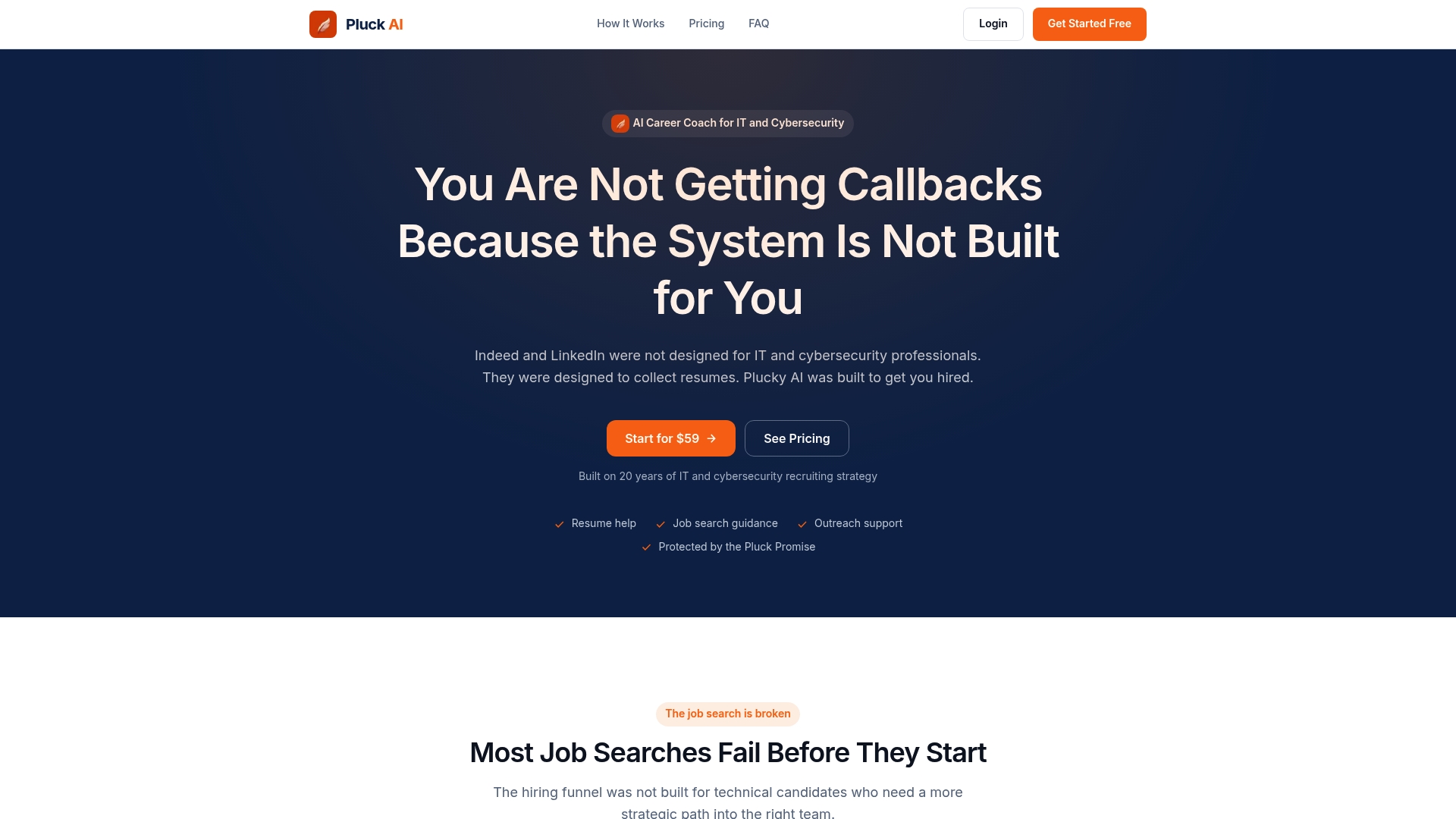
Pluckjobs is an AI-powered job search platform built specifically for IT and cybersecurity professionals. It combines Apollo contact intelligence with SerpAPI-powered role discovery to surface precision job matches, hiring manager contact data, and tailored resumes in one place. Instead of cold-applying to job boards and hoping for a response, Pluckjobs gives you the role, the right person to contact, and a resume already aligned to the job description.
For IT professionals who want to put this checklist into practice without spending hours on manual research, Plucky AI handles the heavy lifting. It automates resume customization for each role, improves ATS pass rates, and tracks your outreach so nothing falls through the cracks. If you want to apply smarter and move faster, it is the right tool for the job.
FAQ
What is an IT job application checklist?
An IT job application checklist is a structured list of steps covering resume formatting, cover letter customization, job selection, portfolio links, and follow-up timing. It helps IT professionals apply consistently and avoid common submission errors.
How long should an IT resume be?
Resume length depends on experience: one page for 0–2 years, two pages for 3–7 years, and two to three pages for 8 or more years. Recruiters spend roughly 6 seconds on initial review, so every line must earn its place.
How many IT jobs should I apply to per week?
Apply to 10–15 targeted roles per week rather than mass applying. Prioritizing quality over volume produces better response rates and keeps your tracking manageable.
What is a ghost job and how do I avoid it?
A ghost job is a listing that is outdated, already filled, or used for passive pipeline building. Avoid listings older than 30 days and skip any posting with vague descriptions or no specific team details.
When should I follow up after submitting an IT job application?
Send one follow-up 7–10 days after submitting your application or completing an interview. Reference the specific role, restate your interest briefly, and ask if anything additional is needed.